
What Size Air Conditioner Do I Need for My Toronto Home?
Quick Summary: Air conditioner sizing is measured in BTUs or tons, and bigger is not better. An oversized unit short-cycles, leaves your home uncomfortable, and wears out faster. The right size comes from a Manual J load calculation, not a square footage guess. For most Toronto semis and detached homes, that’s somewhere between 2 and 3.5 tons.
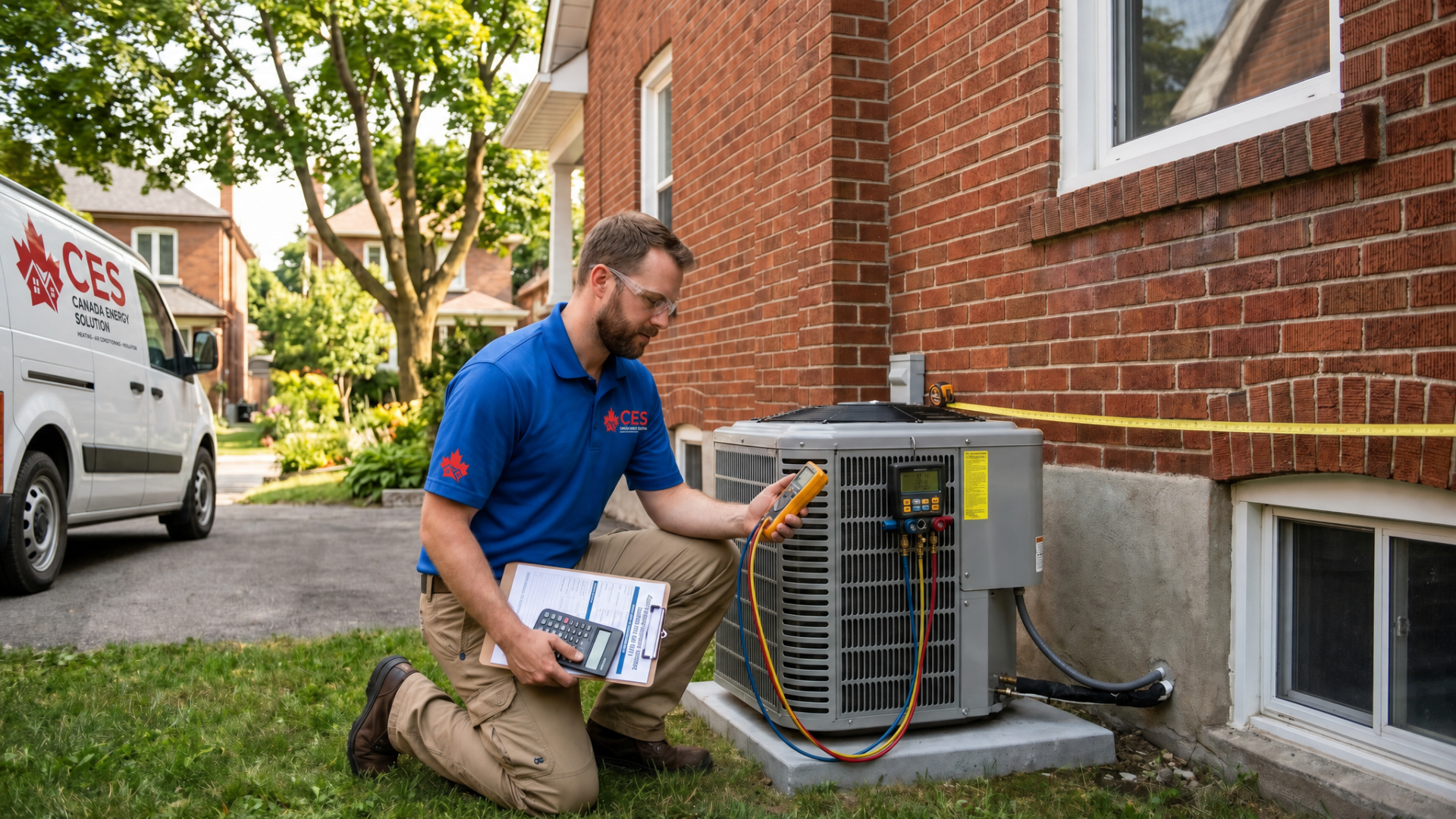
I’m Terence, a senior HVAC technician at Canada Energy Solution. I’ve been installing and servicing heating and cooling systems across the Greater Toronto Area for over fifteen years. Now that the spring rush has slowed down a bit, I finally have time to sit down and share some of the sizing mistakes I keep running into on the job. If you’re shopping for a new AC this summer, a few minutes here could save you thousands of dollars and a lot of frustration.
Back in the summer of 2022, I got a call from a homeowner in Scarborough, near Birchmount and Lawrence. She’d had a brand new 3-ton central AC installed that spring, and she was miserable. “The house is cold,” she said, “but it never feels comfortable. The air just feels stale and heavy, like the system isn’t doing its full job.”
The unit was running. Barely. It’d kick on for eight minutes, hit temperature, shut off. Then do it again. Over and over.
Her contractor had eyeballed it. Two-storey semi in a quiet residential stretch, about 1,700 square feet. “You need three tons.” No measurements, no calculations. A gut call.
That gut call cost her an entire summer of discomfort and eventually a right-sized replacement. I’ve seen this play out dozens of times across the GTA. The frustrating part is it’s completely preventable.
What Does “Tonnage” Even Mean?
Quick primer. Air conditioner capacity is measured in BTUs per hour, or in tons. One ton equals 12,000 BTUs per hour. A 2-ton unit puts out 24,000 BTUs, a 3-ton does 36,000, and so on.
The word “ton” is an old holdover from when buildings were cooled with actual blocks of ice. It refers to the amount of heat needed to melt one ton of ice in 24 hours. Strange bit of history, but it stuck.
In Canada, capacity also shows up in kilowatts on the equipment label. Natural Resources Canada publishes the efficiency standards every unit sold here has to meet.

The Square Footage Rule (And Why It Doesn’t Tell the Whole Story)
There’s a rough guideline that gets thrown around constantly: about 20 BTUs per square foot. It produces something like this:
| Home Size (sq ft) | Estimated BTUs Needed | Approximate Tonnage |
|---|---|---|
| 600–800 | 14,000–18,000 | 1.5 tons |
| 900–1,200 | 18,000–24,000 | 1.5–2 tons |
| 1,200–1,500 | 24,000–30,000 | 2–2.5 tons |
| 1,500–2,000 | 30,000–40,000 | 2.5–3 tons |
| 2,000–2,500 | 40,000–48,000 | 3–4 tons |
| 2,500–3,500 | 48,000–60,000 | 4–5 tons |
But that table is a starting point. Nothing more.
I quoted two houses last fall in the Kingsway area of Etobicoke, same builder, same floor plan, 1,850 square feet each. One had mature maples blocking the afternoon sun and R-60 in the attic. The other sat on the corner lot, west-facing wall of glass, original 1988 insulation. First house needed 2.5 tons. Second one, 3 tons minimum. Same square footage, half a ton apart.

Why an Oversized AC Is Worse Than You Think
This is what I wish every homeowner understood before signing a quote.
An oversized air conditioner drops the temperature fast. But it doesn’t run long enough to circulate and condition the air properly. When the unit short-cycles (kicks on, cools quickly, shuts off), you end up with uneven temperatures between rooms and the system never settles into a steady, efficient rhythm.
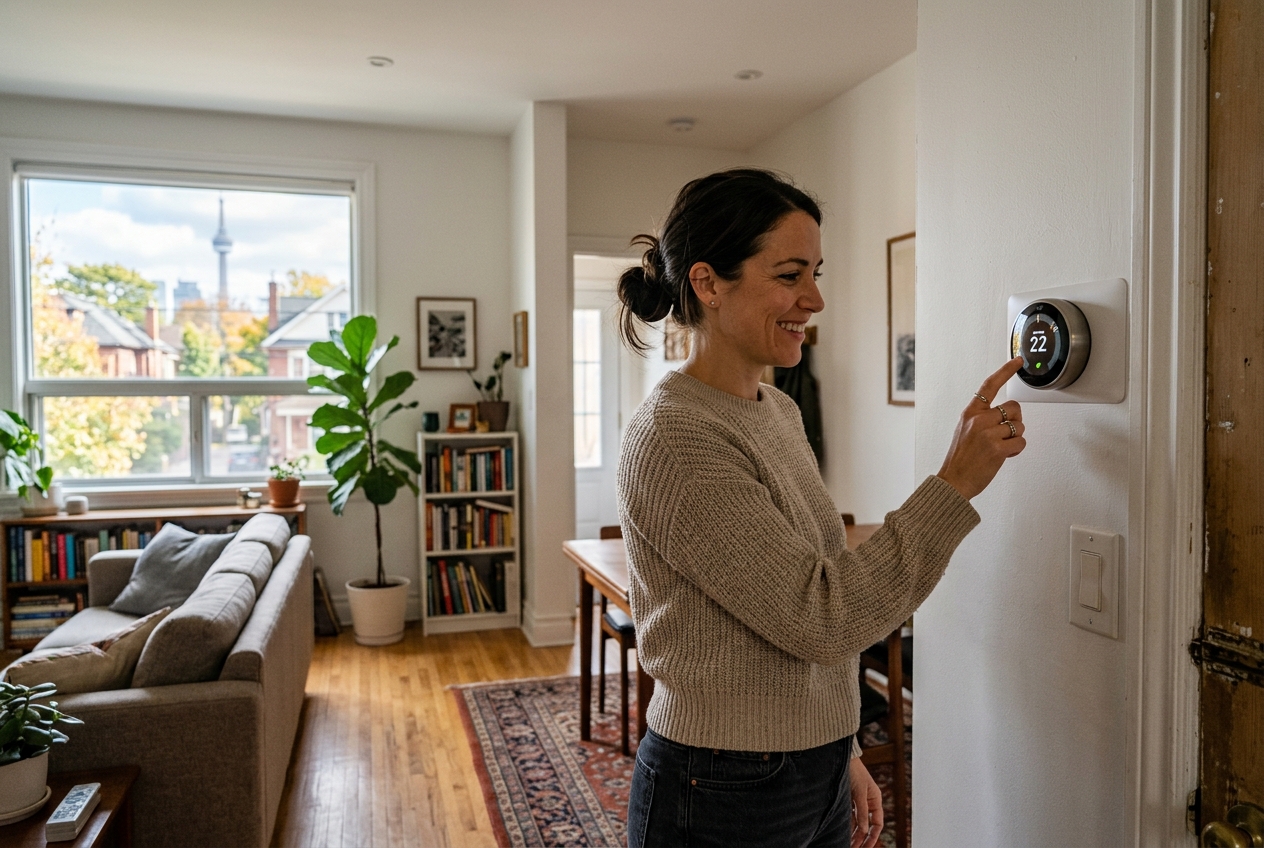
Toronto summers are drier than people in, say, Houston would believe. We don’t usually get that tropical swamp feeling indoors. But an oversized unit still causes real problems here. The most common complaint I hear is hot spots: the thermostat reads 22°C in the hallway, but the upstairs bedrooms are still 26°C because the system shut off before the cool air had time to circulate through the house. You end up turning the thermostat lower and lower, the main floor gets uncomfortably cold, and the bedrooms are still warm.
And honestly? That’s not even the worst part.
Compressors hate frequent starts. Every time one fires up, it draws a surge of electrical current and generates heat internally. An oversized unit that starts and stops every 10 minutes puts the compressor through five times the stress of a right-sized one running steady cycles. That compressor can fail years ahead of schedule. ASHRAE’s engineering handbooks have documented this for decades. Proper sizing isn’t optional.
What Actually Affects Your Cooling Load
Square footage gets the conversation started. These are the things that finish it.
Ceiling height and insulation. Standard eight-foot ceilings are the baseline assumption. Walk into a house with cathedral ceilings or 10-foot plates and you’re conditioning a lot more air volume. Canada’s National Building Code has tightened attic insulation requirements significantly over the years. A 2020 build with R-60 in the attic behaves completely differently from a 1975 bungalow with R-20 and gaps around every pot light.
Windows and sun exposure. South- and west-facing windows in July are heat machines. I’ve walked through brand new builds in Vaughan with floor-to-ceiling windows on the west wall. Gorgeous, but the cooling load is brutal. Meanwhile a heavily treed lot in North York’s older neighbourhoods might offset half of that gain from shading alone. These things matter more than people expect.
People, appliances, and Toronto’s climate zone. Each person in the house generates roughly 250–300 BTUs of heat per hour. A family of five with a home office full of monitors runs a meaningfully higher load than a retired couple. And Toronto sits in climate zone 5, with summer design temperatures around 31–33°C. That number is the foundation of every legitimate load calculation done in this part of Ontario.
What Is a Manual J Calculation?
Manual J is the industry-standard method for calculating exactly how much heating and cooling a specific house needs. It was developed by the Air Conditioning Contractors of America (ACCA) and it’s what any serious installer should be using before they size your system.
It factors in everything: square footage, ceiling height, insulation R-values, window area and orientation, local design temperatures, infiltration rates, internal heat gains. It takes about 45 minutes to do properly for a typical Toronto home. Not something a contractor should skip to save time on the quote.
Here’s my rule of thumb. If an installer gives you a price without walking through your house with a tape measure or asking about your windows and insulation, that’s a red flag. A competent tech doing your central AC installation will always size to match the actual load. No exceptions.
Not sure what size your home actually needs? We do free in-home assessments. No pressure, no obligation. We measure your space, check your ducts and insulation, and give you an honest recommendation. Call (647) 812-5200 or book online.
Replacing an Existing System? Don’t Just Match the Old Size
If the old unit short-cycled and left the house uncomfortable, you probably want to go smaller. I know it feels counterintuitive. “Well, the old one was 3 tons, so…” But if 3 tons was the wrong answer before, it’s still the wrong answer now.
Replacement is also the perfect time to deal with your ductwork. Leaky ducts lose cooling before it even reaches the rooms. Natural Resources Canada estimates duct leakage in older Canadian homes accounts for 20–30% of cooling loss. Fix the ducts, right-size the unit, and the difference is night and day.
And if your attic insulation hasn’t been upgraded in decades, doing that before or alongside a new AC install can actually let you go down a half ton on the unit. Smaller equipment, lower install cost, lower operating cost. Win across the board.
The Ontario Energy Board’s home energy tips are a solid starting point if you want to understand how insulation and equipment work together to reduce your bills.
Picking the wrong AC size could cost you comfort and money. Huge shoutout to the YouTube channel Word of Advice TV for their must-watch video, “WHAT AIR CONDITIONER SIZE DO I NEED? How To Size Air Conditioner For Your House”, don’t miss it!
FAQ
How do I know if my AC is oversized?
Two signs: the house cools unevenly with hot spots upstairs while the main floor gets too cold, and the unit turns on and off every 8–15 minutes instead of running 15–20 minute cycles. A Manual J calculation will confirm it.
Can I just use the same size as my neighbour?
Not safely. I’ve quoted identical floor plans in the same subdivision that needed different tonnage because of window orientation and insulation differences. Your house has its own load profile.
What’s the most common mistake contractors make when sizing?
Going by square footage alone. According to ACCA’s own industry data, a significant percentage of residential AC systems in North America are improperly sized. In my experience across the GTA, over half the time the result is oversized equipment.
Is a bigger unit more energy efficient?
The opposite. An oversized unit short-cycles and uses more energy than a correctly sized one running efficient, longer cycles. A right-sized unit with a high SEER2 rating will always cost less to operate.
Does ceiling height matter a lot?
Absolutely. A room with 10-foot ceilings has 25% more air volume than the same footprint with 8-foot ceilings. That’s a meaningful addition to the cooling load that has to be accounted for.
Ready to Get the Right Size for Your Home?
Call us at (647) 812-5200 for a free consultation, or fill out our online inquiry form. We’ll come to your home, take proper measurements, and tell you exactly what size system makes sense. No upselling, no shortcuts. We get back to you within 24 hours.
About the Author
Terence is a Senior HVAC Technician with over 20 years of experience serving homeowners across the Greater Toronto Area. He works with Canada Energy Solution, providing expert heating, cooling, and ventilation services throughout Toronto, Mississauga, North York, Scarborough, Vaughan, Hamilton, and surrounding communities. He’s personally conducted hundreds of Manual J load calculations and has seen first-hand how proper sizing transforms home comfort.
Terence's HVAC Advice Series
- HVAC Emergency After Hours: What to Do When Your Furnace or AC Stops Working
- 2026 Central AC Installation Cost in Toronto: Full Breakdown and What to Expect
- 2026 Central Air Conditioner Buyer’s Guide for Ontario: Updated Prices, Rebates & Expert Picks
- Ductless Mini-Split vs Central Air: Which Is Right for Your GTA Home?
- Canada’s 10 Best Air Conditioner Brands & Models Reviewed in 2025 and 2026 — Part 3: Comprehensive Buying Guide
- When Tragedy Strikes Home, a Community Must Rise – Standing with the Cristillo Family
- Canada’s 10 Best Air Conditioner Brands & Models Reviewed in 2025 and 2026 — Part 2: Our Top HVAC Technician Picks and Honest Model Recommendations
Recent Posts

SickKids Needs You Right Now
HVAC Emergency After Hours: What to Do When Your Furnace or AC Stops Working
Andrew’s Law Is Now Ontario Law: One Year Later, a Family’s Fight Has Made Our Roads Safer
2026 Central AC Installation Cost in Toronto: Full Breakdown and What to Expect
2026 Central Air Conditioner Buyer’s Guide for Ontario: Updated Prices, Rebates & Expert Picks


Get a Free Consultation
Our Community Contributions

SickKids Needs You Right Now
Andrew’s Law Is Now Ontario Law: One Year Later, a Family’s Fight Has Made Our Roads Safer

When Tragedy Strikes Home, a Community Must Rise – Standing with the Cristillo Family


