
2026 Central AC Installation Cost in Toronto: Full Breakdown and What to Expect
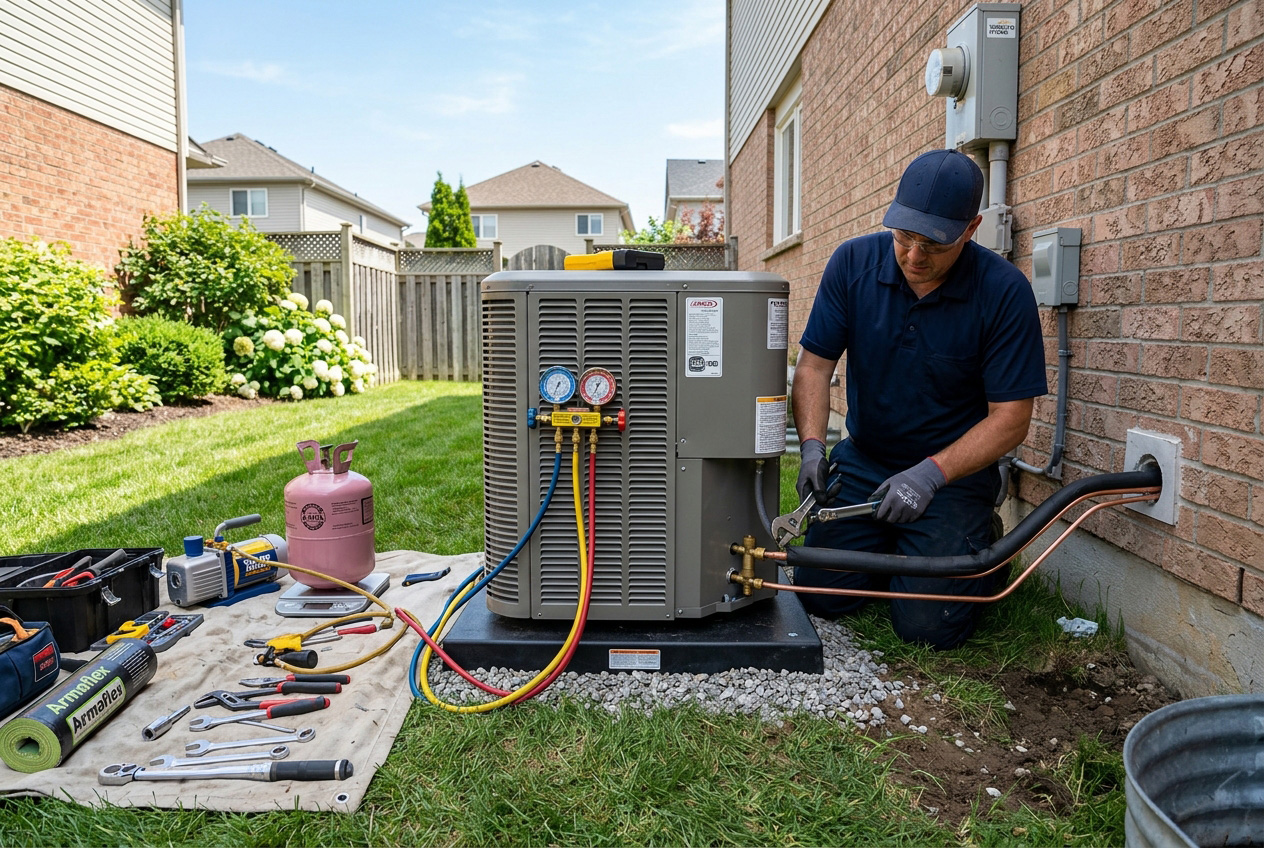
Quick Summary: Central AC installation in Toronto runs $3,500–$7,500 for most homes in 2026, including equipment and labour. What you actually pay depends on unit size, SEER2 efficiency rating, your ductwork condition, and whether electrical upgrades are needed. Hidden costs like permits, disposal, and concrete pads can add a few hundred more. Costs are up across the board this year due to rising material and labour prices.
I’m Terence, a senior HVAC technician at Canada Energy Solution. I’ve been installing and servicing residential heating and cooling systems across the Greater Toronto Area for over fifteen years. Between our spring installs and the first wave of summer quotes, I’ve seen a lot of confused homeowners staring at three very different numbers on three different quotes. So I wanted to put together an honest breakdown of what AC installation actually costs in 2026, what’s driving those numbers up, and how to read a quote without getting blindsided.
A neighbour of mine in Mississauga, over near Erin Mills, asked me last August what she should budget for central air. She’d gotten three quotes: $3,800, $5,200, and $7,100. “They all said they were installing the same thing,” she told me. “Why is there a $3,300 difference?”
Short answer: they probably weren’t installing the same thing, and at least one of those quotes was leaving something out.
That kind of pricing spread is completely normal in the GTA. But it’s confusing, and it pushes people toward either the cheapest option without understanding what’s missing, or the most expensive one without knowing why it costs that.
Why 2026 Prices Are Higher Than You Might Expect
Before we get into the numbers, it’s worth understanding the broader context. If you’re comparing quotes to what your neighbour paid two or three years ago, the landscape has shifted.
Global supply chains are still feeling the effects of ongoing trade tensions and tariff changes between the U.S. and Canada. Steel, copper, aluminum, and refrigerant are all more expensive than they were in 2024. Shipping costs have climbed as fuel prices remain elevated. And here in Ontario, skilled trades labour is in high demand across the construction sector, which means technician wages have gone up too.
The reality is that HVAC equipment, raw materials, and installation labour are all trending upward, and there’s no sign of that reversing in the near term. A quote that looks higher than what you expected based on 2023 or 2024 pricing is reflecting these real cost increases, not someone trying to overcharge you.
On r/askTO, Toronto homeowners sharing recent quotes are consistently reporting higher numbers than even a year ago. One poster paid $9,887 all-in for a Lennox furnace and AC combo in late 2024, and that was considered a reasonable deal. Another on r/TorontoRealEstate paid $4,000 for a basic 1.5-ton replacement in Hamilton. These real-world numbers line up with what we’re seeing in the field.
The Price Ranges: What to Expect in 2026
Straight breakdown for a standard central AC installation in the GTA this year:
| Scenario | Estimated Cost (CAD) |
|---|---|
| Standard efficiency (18–20 SEER2), 1.5–2 ton, existing good ducts | $3,500–$4,500 |
| Mid-range 2–3 ton, 18–22 SEER2, minor duct work needed | $4,500–$5,500 |
| Larger home (3–5 ton), premium 22–25+ SEER2, full installation | $5,500–$7,500 |
| High-end zoned system, major duct repair or electrical upgrade | $7,500–$12,000+ |
These numbers reflect the Toronto market. Labour costs here are higher than in smaller Ontario cities. Technician wages, insurance, licensing, and overhead are all real. A contractor cutting corners on any of those is a contractor you don’t want touching your equipment.
What Actually Drives the Price
1. Unit Size
Bigger house, bigger unit, bigger cost. A 1.5-ton unit for a small bungalow in Etobicoke costs significantly less than a 4-ton system for a large two-storey in Vaughan’s Kleinburg area. But don’t just buy the biggest available. An oversized unit causes short-cycling and uneven cooling regardless of what you paid for it.
2. SEER2 Rating
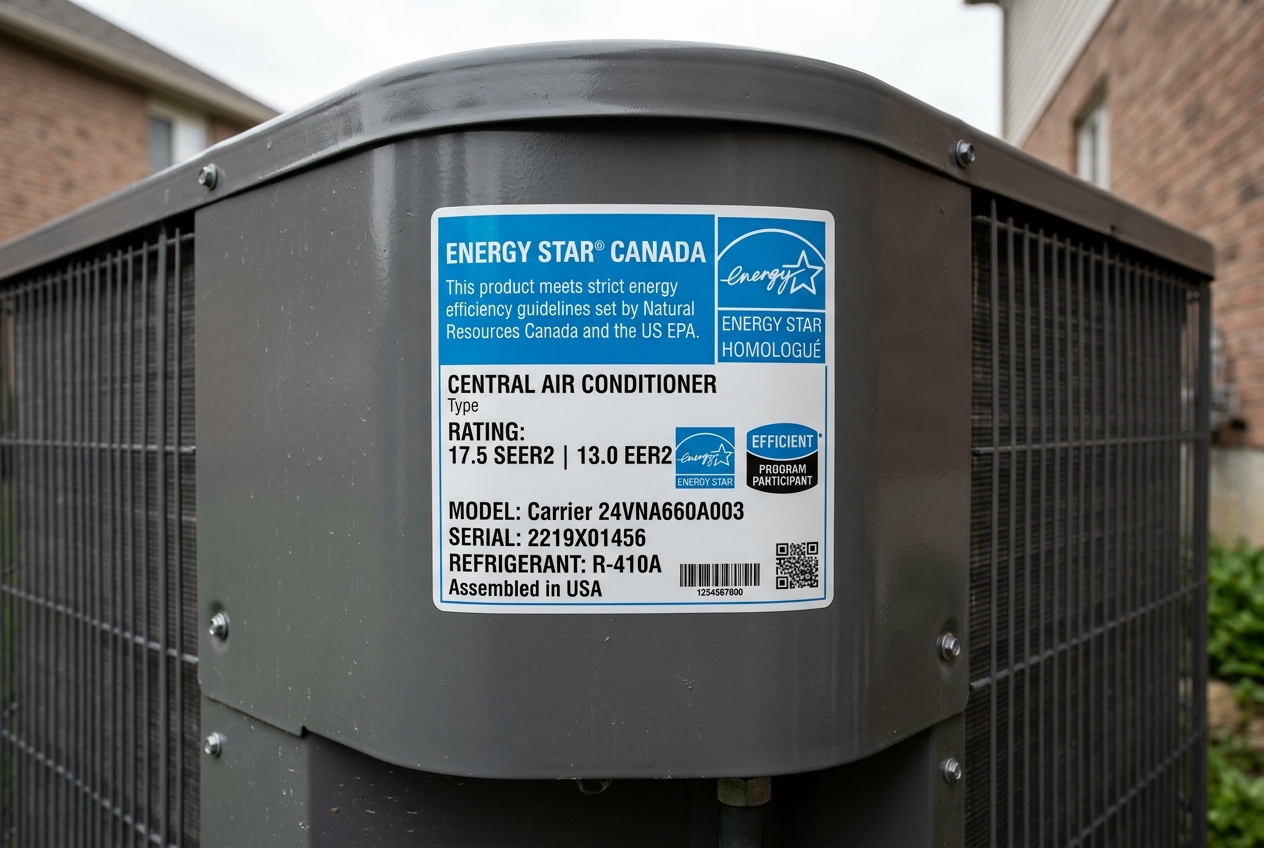
SEER2 is the current efficiency standard for air conditioners, replacing the old SEER metric as of 2023. Higher SEER2 means lower hydro bills but higher purchase price.
Natural Resources Canada’s ENERGY STAR program certifies high-efficiency units. A 20+ SEER2 model might cost $800–$1,500 more than baseline, but can save $150–$350 per cooling season depending on usage. Over 15 years, that math usually favours the more efficient unit. With electricity rates continuing to climb in Ontario, the payback period is getting shorter every year.
3. Ductwork Condition
Existing forced-air ducts in good shape? Installation is straightforward. Old, leaky, undersized ducts? That’s where costs climb:
- Minor duct sealing: $200–$600
- Duct modifications for the new system: $500–$2,000
- Full ductwork replacement in a detached home: $5,000–$15,000
Toronto’s older neighbourhoods are where this comes up most. East-end semis, Annex detached homes, Etobicoke bungalows. Lots of ductwork that was never designed for central air. Always ask your installer to assess duct condition as part of the quote.
4. Electrical Upgrades
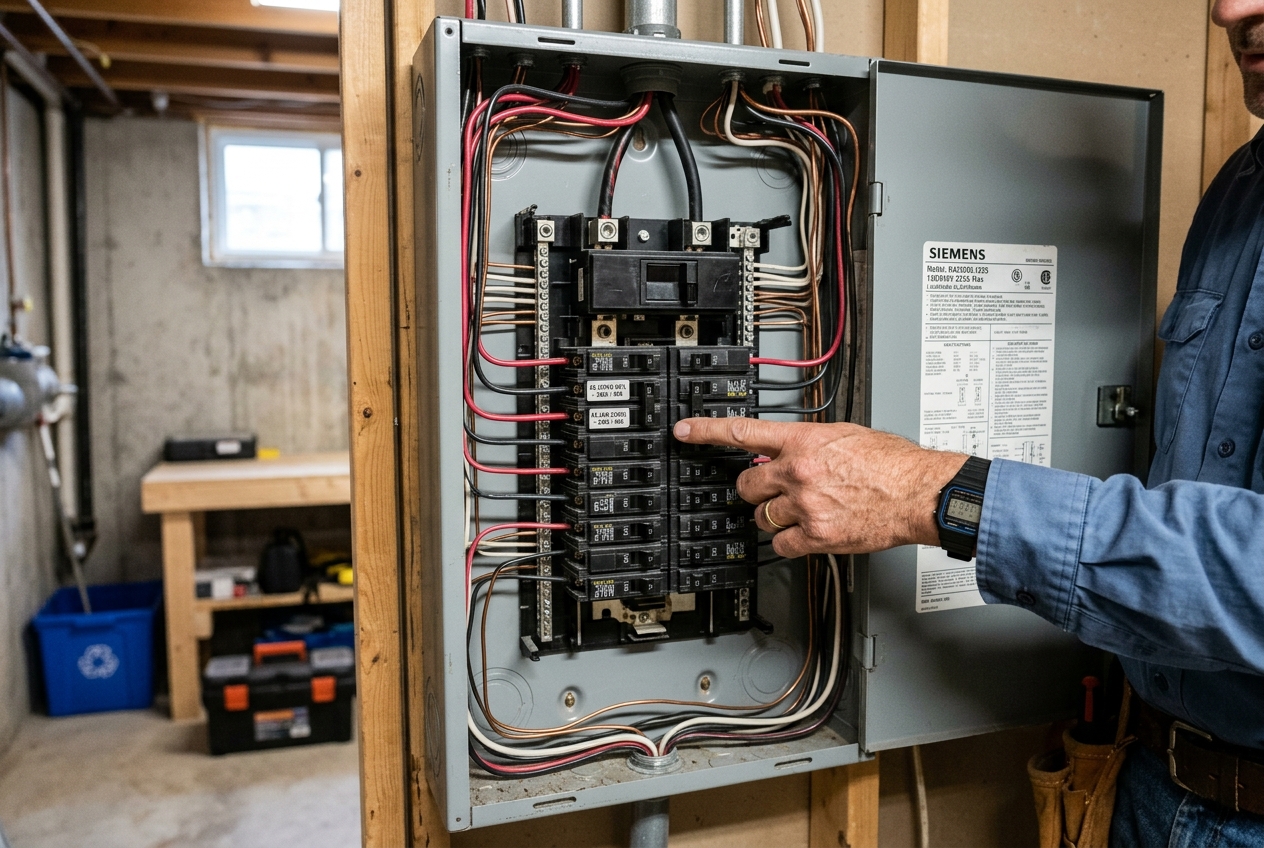
A new AC needs a dedicated 240V circuit. Older GTA homes with 100-amp panels often need an upgrade before installation can proceed.
A dedicated circuit addition: $300–$700. Full panel upgrade from 100-amp to 200-amp (increasingly common in homes also adding EV chargers or heat pumps) runs $2,000–$4,500. Legitimate cost, legitimate need. Don’t pick a contractor who skips this when it’s required.
Hidden Costs That Cause Sticker Shock

These are the line items that surprise people when the invoice lands.
Building permit. The City of Toronto’s permit requirements specify when one is needed for AC installations. Expect $150–$400. A legitimate contractor handles this. Be wary of anyone who says permits aren’t required without explaining why.
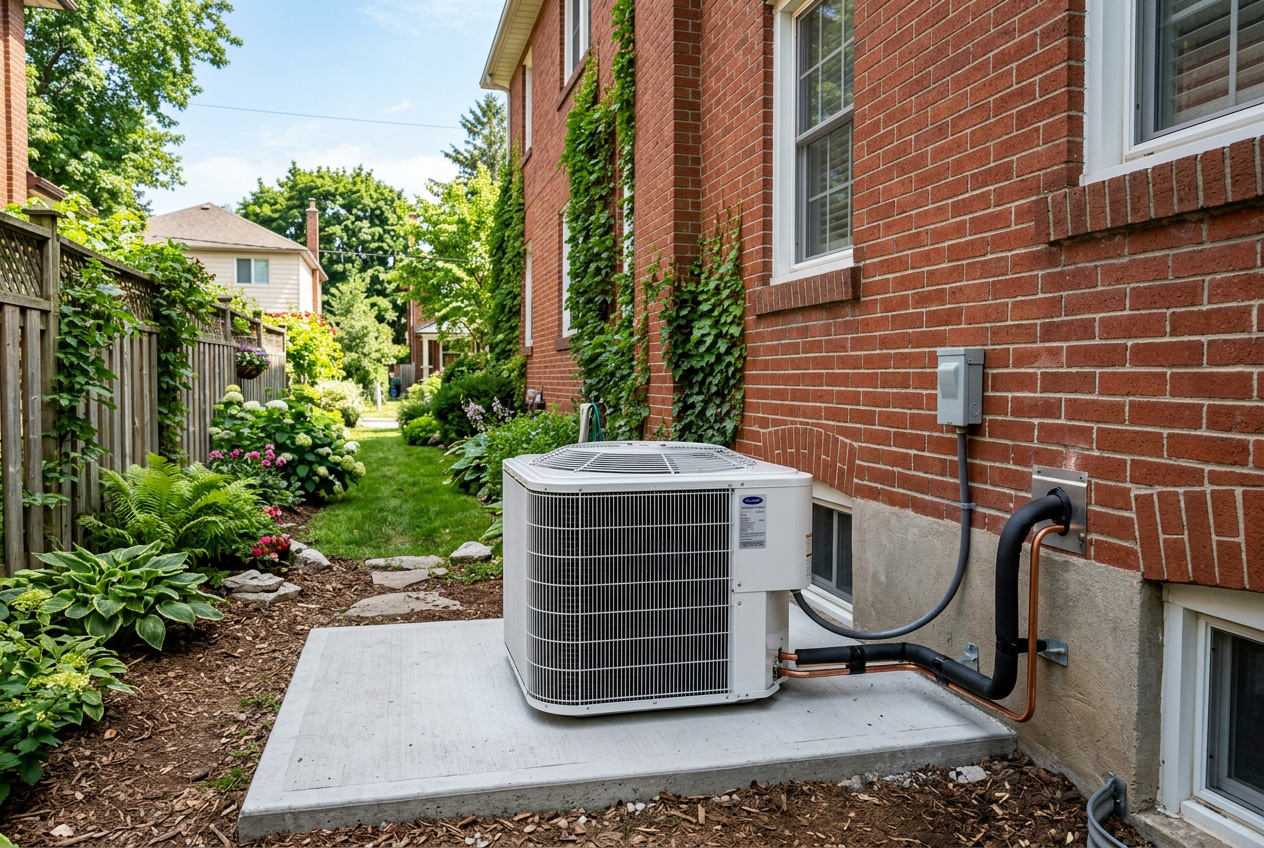
Concrete pad. The outdoor condenser needs a level, stable base. No existing pad? A pre-poured one runs $150–$300. Composite pads are cheaper.
Line set. The refrigerant lines connecting outdoor to indoor unit. Usually included in the quote, but verify. Long or complex runs (back of the house to a furnace in the front) can add $200–$500.
Old unit disposal. Removing a unit with refrigerant requires a licensed technician and proper recovery per TSSA regulations. Expect $150–$400 if not already in the quote. The HRAI maintains industry standards for refrigerant handling and equipment disposal.
Condensate drain. High-efficiency units produce condensation that needs to drain somewhere. If there’s no existing drain line near your furnace location, running one can add $100–$300. Small cost, easy to overlook on quotes.
Brand Comparison: What Differences Actually Matter
Popular AC brands in the Toronto market:
| Tier | Examples | Relative Cost | Notes |
|---|---|---|---|
| Premium | Lennox XC, Carrier Infinity, Trane XV | +20–35% vs mid | Top SEER2, better warranty, quieter |
| Mid-tier | Carrier Performance, Lennox Merit, Daikin DX | Baseline | Solid reliability, competitive warranty |
| Value | Goodman, York, ICP | −15–25% vs mid | Decent units, lower upfront, shorter warranty |
The honest consensus from homeowners on Reddit’s r/hvacadvice is that mid-tier units perform as well as premium brands for most residential applications. The installer quality matters as much or more than the nameplate on the box. A Lennox installed badly will not outperform a Goodman installed correctly.
I’ve installed all of these. My take: for most Toronto homes, a mid-tier unit from a reputable manufacturer, properly sized and installed, serves you well for 15–18 years. Premium brands buy you quieter operation, higher peak efficiency, and usually a better warranty. Whether that’s worth the upcharge depends on your priorities.
Rebates: What’s Available in Ontario Right Now
The federal Canada Greener Homes Grant closed in 2024. The Greener Homes Loan has also closed.
The current option in Ontario is the Home Renovation Savings Program, delivered through Enbridge Gas and Save on Energy. Some high-efficiency equipment qualifies for rebates under this program. Check current eligibility at homerenovationsavings.ca before you commit. Amounts and criteria change.
The Ontario Energy Board also has resources on understanding energy costs and identifying savings opportunities.
We check rebate eligibility for every customer at no charge as part of the quote process.
Getting quotes and not sure how to compare them? We do free consultations, no pressure, no obligation. We walk you through exactly what the job involves and what’s included in our price. Reach out today.
What a Fair Quote Should Include
Any legitimate AC installation quote should clearly list:
- Equipment (model number, SEER2 rating, warranty terms)
- Labour
- Refrigerant lines (line set length and material)
- Electrical connection work
- Old unit removal and disposal (if applicable)
- Permit costs (or clear explanation of why none needed)
- Pad installation (if needed)
If a quote just says “supply and install AC, $4,200” with no breakdown, ask for one. You’re entitled to know what you’re paying for.
We have been following the YouTube channel ThomasAC and his video, “The Real Cost of Replacing an HVAC System in 2026.” Even though they are based in the United States, the inflation we are experiencing is universal. Find out why the prices for HVAC systems are increase so significantly in 2026. When prices are too low, corners often have to be cut. When prices are too high, you may be paying for things you don’t actually need.
FAQ
Why do AC quotes vary so much in Toronto?
Size, SEER2 rating, ductwork condition, electrical requirements, and what’s included in the price. A lower quote often excludes items like permits, disposal, or electrical work that a higher quote includes. Always compare apples to apples.
Does a higher SEER2 rating justify the extra cost?
Usually yes, over time. A 22 SEER2 unit can save $200+ per year on electricity versus a baseline model. Over 15 years, that frequently offsets the upfront difference.
Do I need a permit for AC installation in Toronto?
For standard replacements, often not. For new installations or those involving significant electrical work, often yes. Your contractor should handle this and clarify whether it’s included in the quote.
Can I get a rebate on a new AC in Ontario?
The federal Greener Homes programs (both Grant and Loan) have closed. Ontario’s Home Renovation Savings Program through Enbridge Gas and Save on Energy offers rebates for some high-efficiency equipment. We check eligibility for all customers.
How long does installation take?
A standard install in a home with existing ductwork: 4–8 hours. A full day for most jobs. More complex installs with electrical work or duct modifications may run into a second day.
Ready for a Real Quote?
Call us at (647) 812-5200 for a free in-home consultation, or fill out our inquiry form. We’ll assess your home, give you an itemized quote, and explain every line of it. No pressure. We respond within 24 hours.
About the Author
Terence is a Senior HVAC Technician with over 20 years of experience serving homeowners across the Greater Toronto Area. He works with Canada Energy Solution, providing expert heating, cooling, and ventilation services throughout Toronto, Mississauga, North York, Scarborough, Vaughan, Hamilton, and surrounding communities.
Terence's HVAC Advice Series
- HVAC Emergency After Hours: What to Do When Your Furnace or AC Stops Working
- 2026 Central Air Conditioner Buyer’s Guide for Ontario: Updated Prices, Rebates & Expert Picks
- Ductless Mini-Split vs Central Air: Which Is Right for Your GTA Home?
- What Size Air Conditioner Do I Need for My Toronto Home?
- Canada’s 10 Best Air Conditioner Brands & Models Reviewed in 2025 and 2026 — Part 3: Comprehensive Buying Guide
- When Tragedy Strikes Home, a Community Must Rise – Standing with the Cristillo Family
- Canada’s 10 Best Air Conditioner Brands & Models Reviewed in 2025 and 2026 — Part 2: Our Top HVAC Technician Picks and Honest Model Recommendations
Recent Posts

SickKids Needs You Right Now
HVAC Emergency After Hours: What to Do When Your Furnace or AC Stops Working
Andrew’s Law Is Now Ontario Law: One Year Later, a Family’s Fight Has Made Our Roads Safer
2026 Central Air Conditioner Buyer’s Guide for Ontario: Updated Prices, Rebates & Expert Picks
Ductless Mini-Split vs Central Air: Which Is Right for Your GTA Home?


Get a Free Consultation
Our Community Contributions

SickKids Needs You Right Now
Andrew’s Law Is Now Ontario Law: One Year Later, a Family’s Fight Has Made Our Roads Safer

When Tragedy Strikes Home, a Community Must Rise – Standing with the Cristillo Family


