
HVAC Emergency After Hours: What to Do When Your Furnace or AC Stops Working
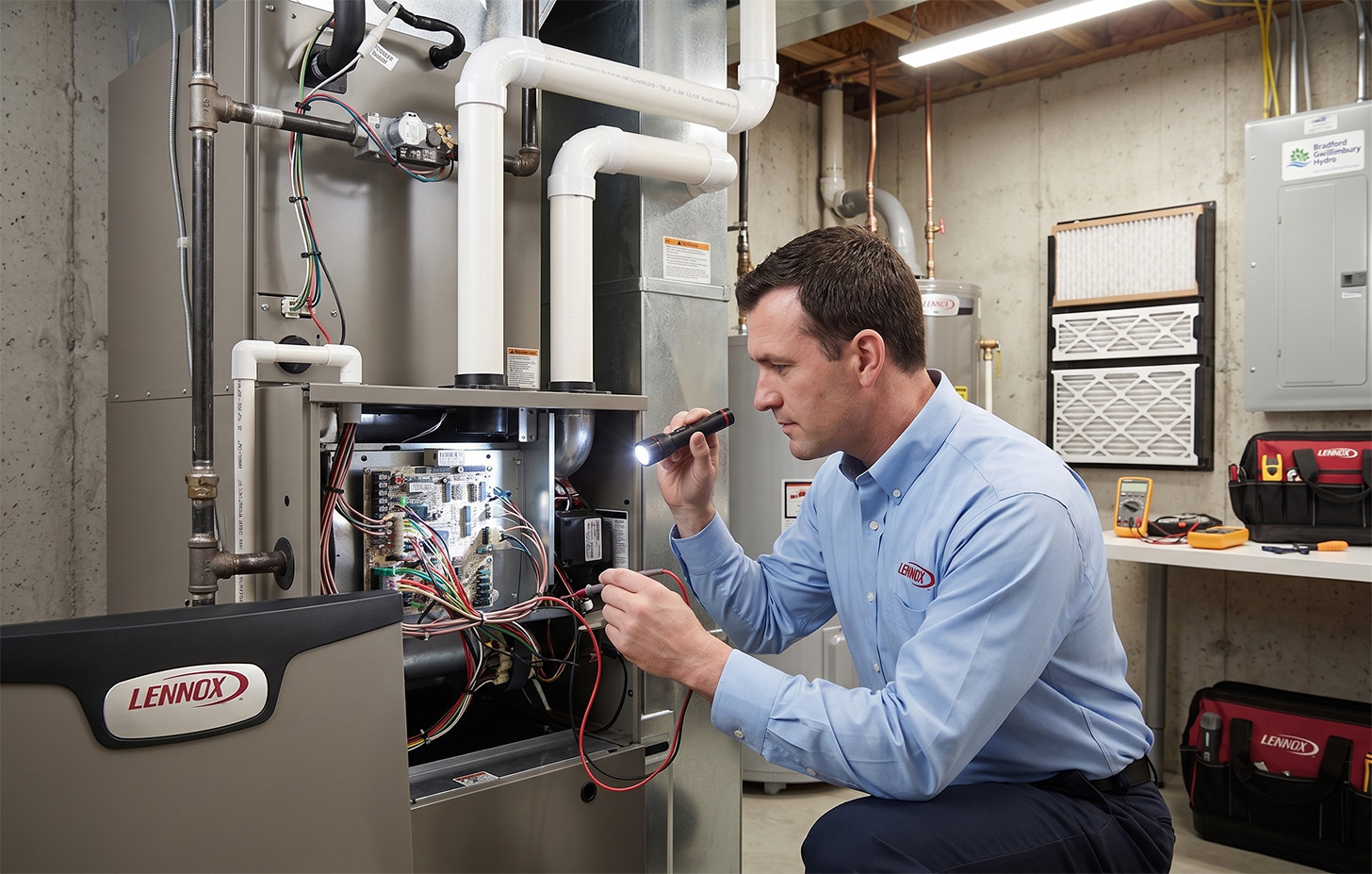
Quick Summary: Most after-hours HVAC “emergencies” can be safely triaged before calling for service. Gas smell or CO alarm? Get out and call the gas company. No heat at -18°C with kids in the house? That’s a real emergency. Everything else: work through the basic checks below first and you could save yourself hundreds on an after-hours service call.
I’m Terence, a senior HVAC technician at Canada Energy Solution. I’ve been on the other end of after-hours phone calls for over fifteen years across the Greater Toronto Area. After hundreds of evening and weekend service calls in every corner of the GTA, I wanted to put together the guide I wish every homeowner had before they pick up the phone. About half the calls I get could have been resolved at home in under ten minutes. The other half genuinely needed a technician. This article is meant to help you figure out which situation you’re in.
It was an evening in January, around 6:30, and my phone rang. The woman on the other end was in Oakville, and she was panicking. Her furnace had stopped, it was -18°C outside, and she had two kids home from school. She’d been troubleshooting for about an hour and wasn’t getting anywhere.
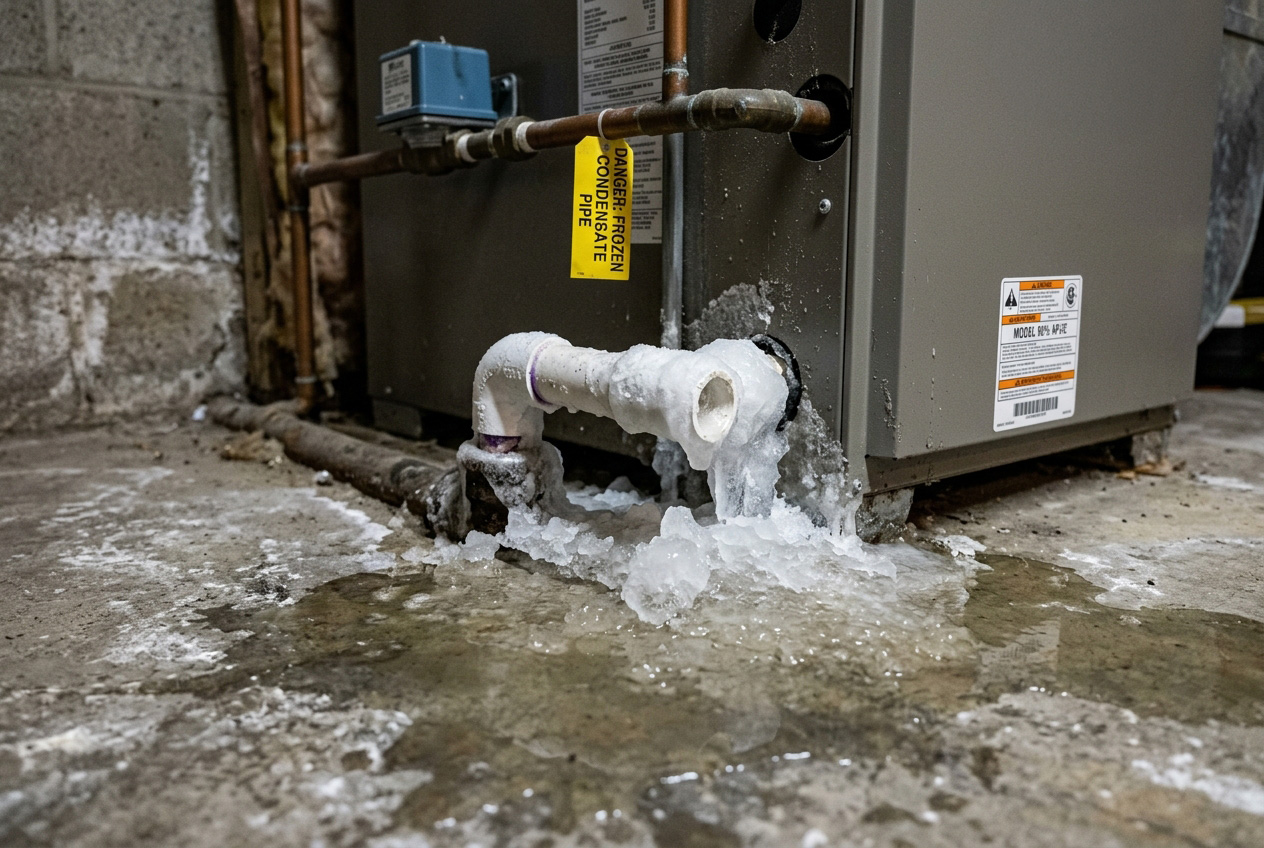
I talked her through a few things over the phone. Turned out the condensate drain had frozen and backed up, tripping a pressure switch fault. She flushed it with warm water. Heat came back in ten minutes. No emergency service call. No after-hours bill.
Not every call ends that easily. Some situations genuinely need immediate response. But knowing the difference between “this has to be fixed right now” and “this can wait a few hours and save me several hundred dollars” is knowledge worth having.
Is This a Real Emergency?
Ontario winters have become increasingly unpredictable. In the last two years alone, we’ve seen events that made “HVAC emergency” a very real phrase for hundreds of thousands of families.
In March 2025, a devastating ice storm knocked out power to over 396,000 homes and businesses across central and northern Ontario. Some areas near Georgian Bay didn’t get power back for nearly a week. Families in Barrie, Orillia, and Muskoka went days without heat in below-freezing temperatures. Then in December 2025, another winter storm brought heavy snow, freezing rain, and high winds that left over 60,000 Hydro One customers in the dark, with road conditions so bad that repair crews couldn’t reach affected areas. And in January 2026, a polar vortex pushed extreme cold alerts across the entire GTA, with wind chills hitting -30°C and below.
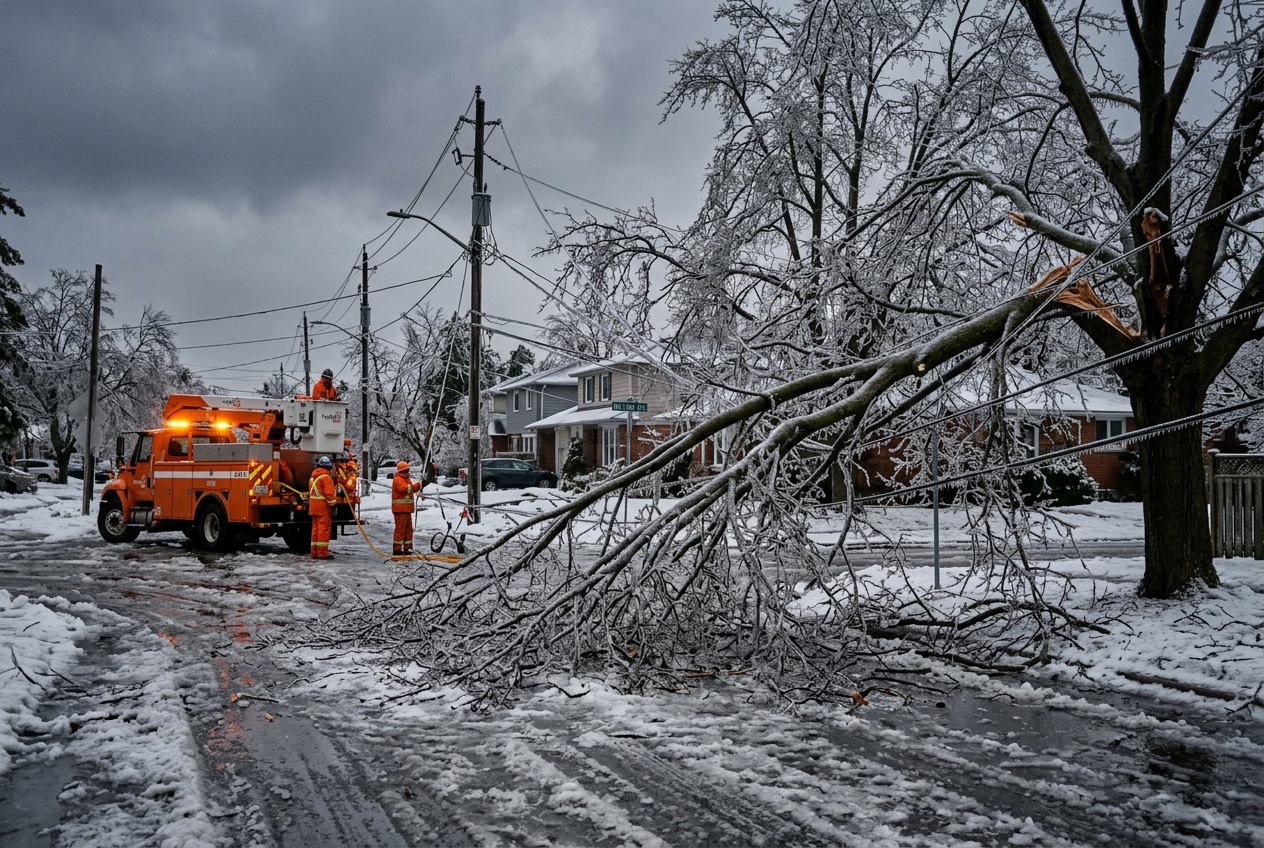
When events like these hit, furnace failures go from inconvenient to dangerous fast.
Work through these questions in order. Stop at the first “yes.”
Do you smell gas?
Stop reading. Get everyone out of the house. Call Enbridge Gas Emergency at 1-866-763-5427 from outside the building. Do not flip any light switches. Do not re-enter until Enbridge clears it. A gas smell is always a gas leak until someone with instruments says otherwise.
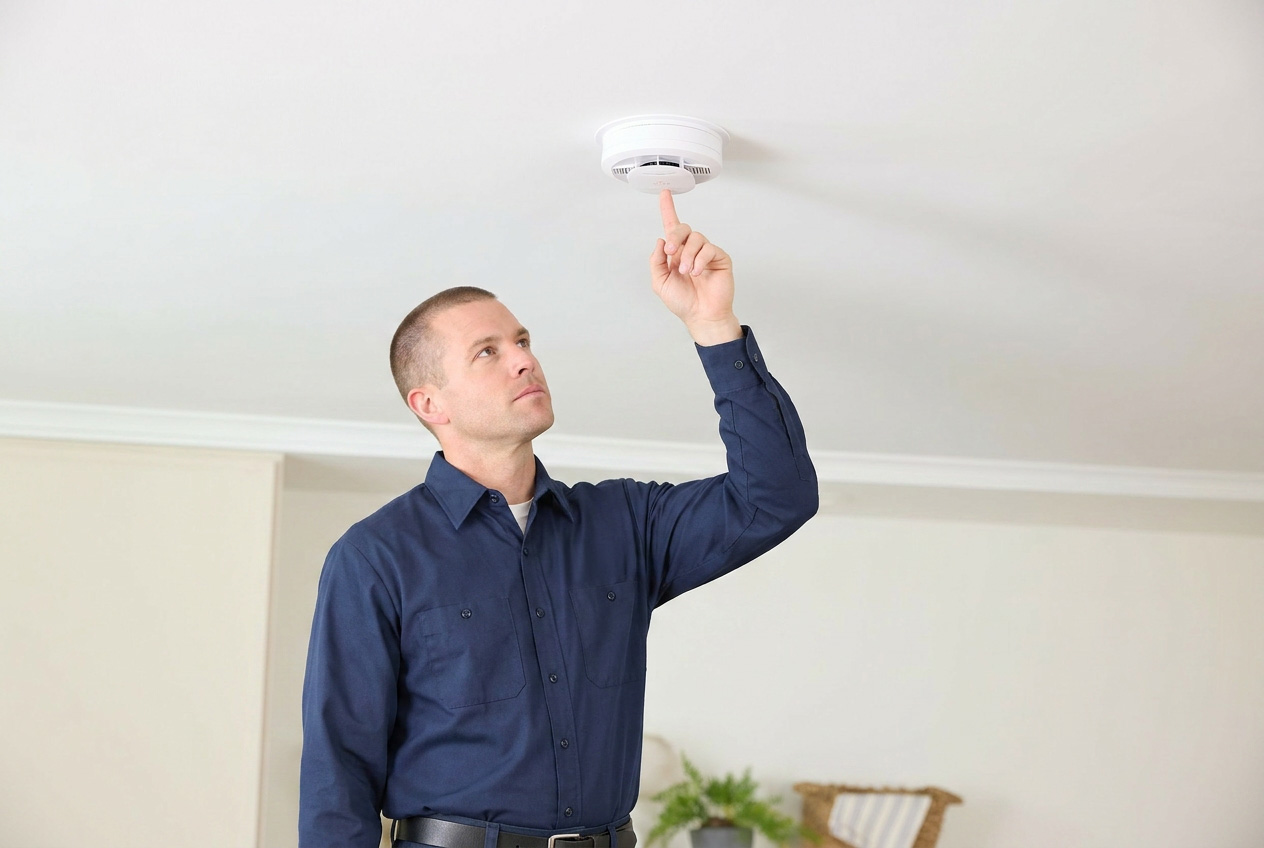
Is your CO detector going off?
Get out. Call 911 from outside. Carbon monoxide is odourless and colourless. Health Canada is very clear that CO alarms are life-safety devices. Don’t go back in to investigate. Don’t assume the alarm is malfunctioning. One important note: some CO detectors will chirp or trigger a warning when their battery is low or dying. This is not the same as a full CO alarm. A low-battery chirp is usually a single beep every 30–60 seconds, while a real CO alarm is a continuous pattern of loud beeps. Check and replace your CO detector batteries at least twice a year (a good habit is when you change clocks for daylight saving time). If the unit is more than 7 years old, replace it entirely. But when in doubt, treat any alarm as real, get out, and call 911. You can sort out whether it was a battery issue later from a safe location.
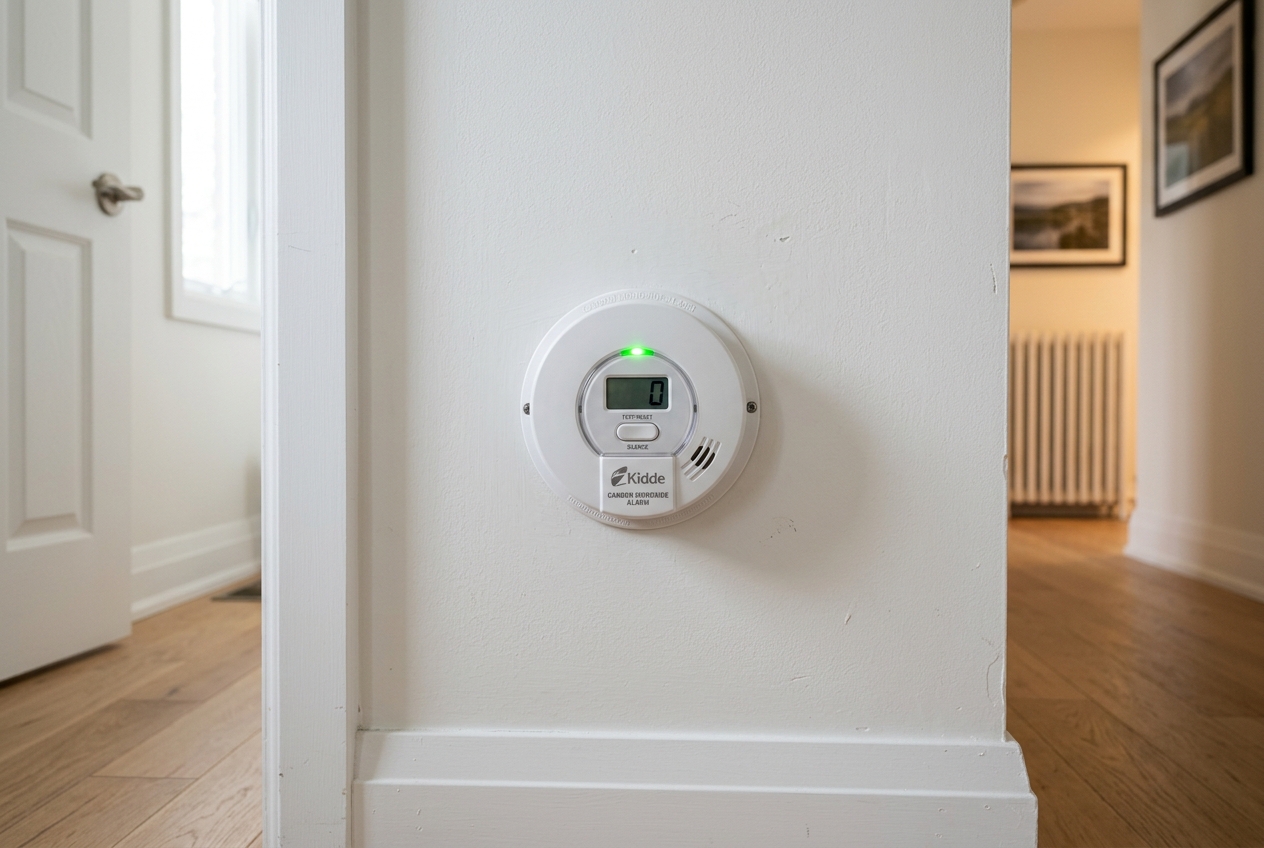
Visible fire, sparks, or smoke from the unit?
Get out. Call 911.
Is it below -10°C outside, you have no backup heat, and there are vulnerable people in the home (infants, elderly, medical conditions)?
This is a genuine emergency if heat can’t be restored in the next hour. Call for emergency HVAC service. If you’re also dealing with a power outage and have no backup heating at all, move to a warming centre or a neighbour’s home that still has heat. Don’t wait.
Your furnace or AC isn’t working but conditions are manageable, or you have backup heat?
Work through the basic checks below. You may fix it yourself. If not, calling during regular business hours the next morning will save you hundreds compared to an after-hours visit.
Basic Checks Before You Call Anyone
These resolve a surprising number of after-hours calls. Do them in order.
1. Check the thermostat. Heat mode on? Temperature set above current room temp? Nobody bumped it to “off” or “cool”? I drove to a house in Richmond Hill one evening because a toddler switched the mode to fan-only. Not a joke. Also check the batteries. Many smart thermostats lose their settings when the batteries die.
2. Check the furnace power switch. Standard light-switch style, usually on the furnace or on the wall nearby. Gets bumped off all the time, especially if anyone’s been doing laundry or moving things around in the mechanical room. Make sure it’s on.
3. Check the circuit breaker. The furnace has its own dedicated breaker. If it’s tripped, reset it once. If it trips again right away, stop. There’s an electrical fault. That needs a professional.
4. Read the error code. Most modern furnaces have a small LED on the control board that blinks a diagnostic code when something’s wrong. The pattern corresponds to a fault listed on a sticker inside the furnace door. Common ones:
- Pressure switch fault: often a blocked condensate drain (see step 6)
- Ignition failure: try cycling the power off for 30 seconds, then back on. This resets the ignition sequence.
- Limit switch tripped: furnace overheated, usually from a clogged filter
5. Check the filter. A severely clogged filter makes the furnace overheat and trip the high-limit safety switch. Pull the filter out and hold it up to a light. If you can’t see through it, replace it. Hardware stores like Canadian Tire, Home Depot, even some 24-hour Walmarts carry standard sizes. CMHC recommends checking furnace filters monthly during heating season for exactly this reason.
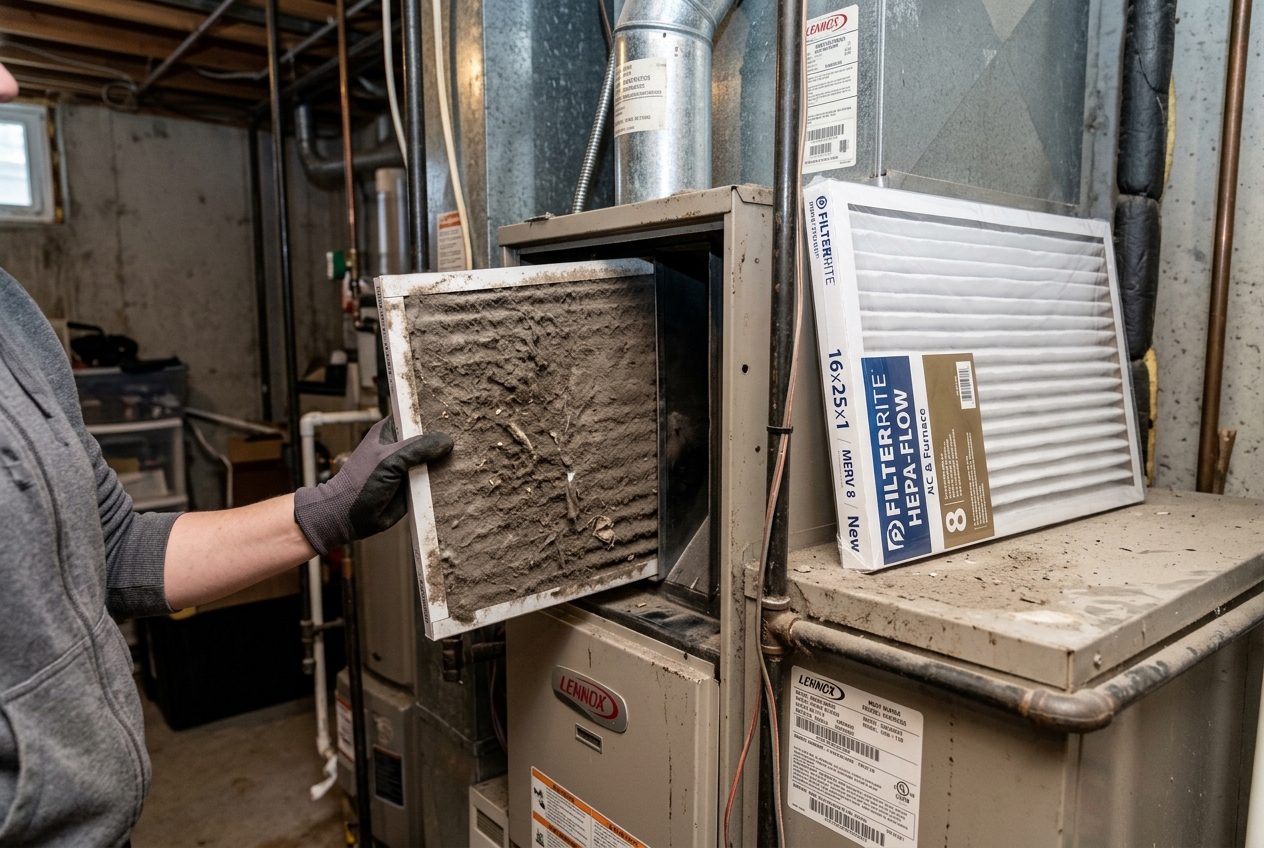
6. Check the condensate drain. High-efficiency furnaces produce condensation that drains through a small plastic tube. In deep cold, that tube can freeze solid. If you see water pooled around the furnace base or a pressure switch fault code, this is often why. Flush the drain with warm water or use a wet-dry vac to clear it.
When You Absolutely Need Emergency Service
Some situations genuinely cannot wait.
Confirmed gas leak. Enbridge emergency line, always. Not your HVAC company. Not a neighbour. Get out, call from outside.
No heat during extreme cold, with vulnerable people in the home. After what Ontario went through in the 2025-2026 winter, this isn’t hypothetical. When the December 2025 storm knocked out power across the GTA, families in Hamilton, Burlington, and Oakville had to make real decisions about whether to stay or leave. The Canadian Red Cross cold weather safety guide recommends moving to a warm shelter if you cannot maintain safe indoor temperatures within a reasonable time. For infants and elderly family members, that window is shorter than most people realize.
Furnace failure during a power outage. If power has been restored but your furnace won’t restart, check the breaker and try a power cycle (off for 30 seconds, then back on). If it still won’t fire, you may have an igniter or control board issue that developed during the outage. These need a tech.
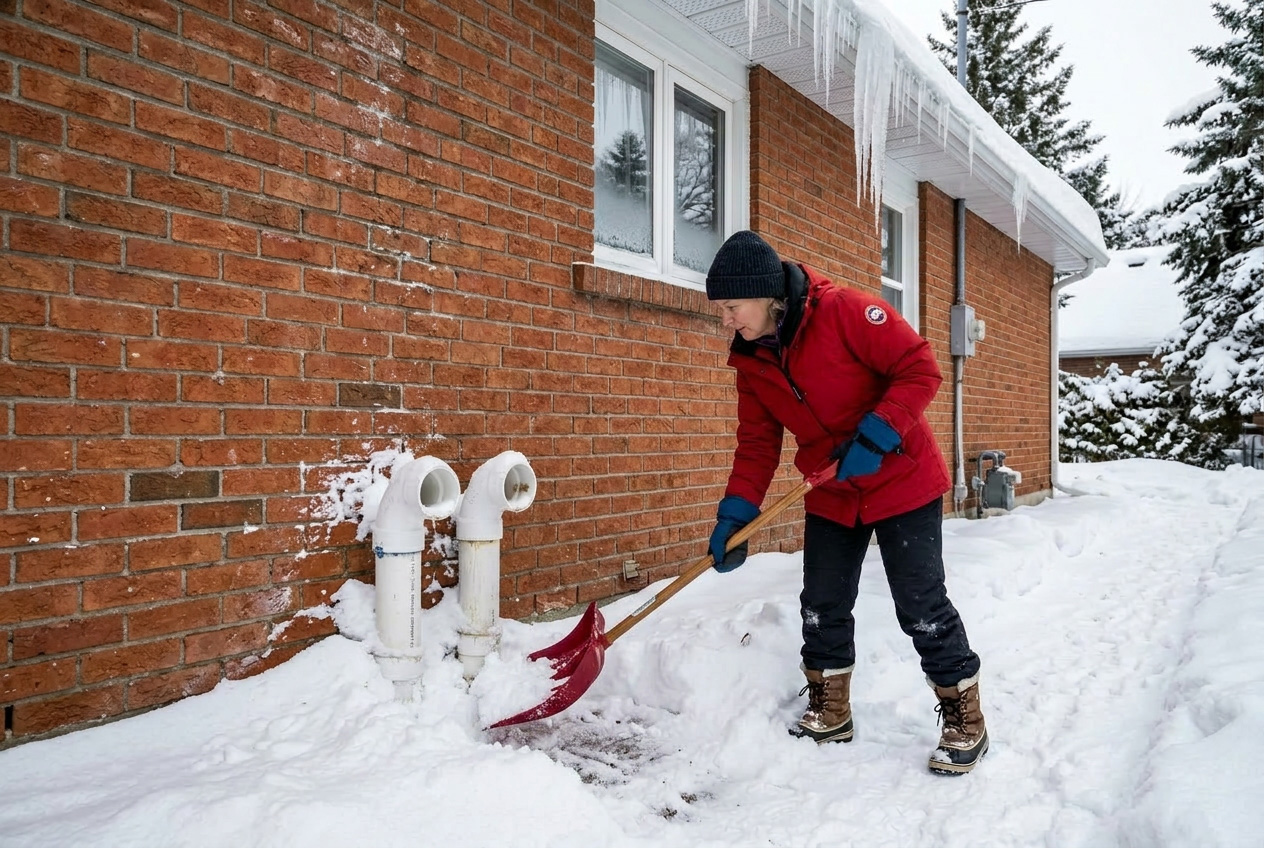
Heavy snow or ice buildup blocking your furnace exhaust. High-efficiency furnaces vent through PVC pipes on the side of the house. After a heavy snowfall or ice storm, snow can pack around the intake and exhaust pipes. If the furnace can’t vent properly, it will shut down on a safety fault. Go outside and carefully clear any snow, ice, or debris away from the pipes. This is one of the most common post-storm calls I get, and it’s something you can usually fix in five minutes with a broom.
Roof ice dams causing water intrusion near the furnace. Ontario’s freeze-thaw cycles create ice dams on roofs, and the water has to go somewhere. If you notice water dripping near your furnace or mechanical room after a storm, shut the furnace off and address the water issue first. Water and gas equipment don’t mix.
Electrical burning smell from the furnace. Not a fuel smell. An electrical one, like hot plastic or melting rubber. This means a motor or wiring failure. Shut the furnace off at the switch and call.
Active water flooding from the furnace. A little condensation is normal. Water actively flowing across your basement floor is not.
Furnace running but blowing only cold air, and you’ve already done the basic checks. Usually indicates a failed igniter, heat exchanger issue, or gas valve problem. These require a licensed technician to diagnose.
GTA Emergency Contact Numbers You Should Save
Keep these on your phone. You don’t want to be searching for them during an emergency.
| Service | Phone Number | Available |
|---|---|---|
| 911 (fire, CO alarm, medical) | 911 | 24/7 |
| Enbridge Gas Emergency (gas leak, gas smell) | 1-866-763-5427 | 24/7 |
| Toronto Hydro (power outage, downed wire) | 416-542-8000 | 24/7 |
| Hydro One (power outage, rural/suburban Ontario) | 1-800-434-1235 | 24/7 |
| Alectra Utilities (Mississauga, Hamilton, Vaughan, Brampton) | 1-833-253-2872 | 24/7 |
| Halton Hills Hydro (Halton region) | 519-853-3700 | 24/7 |
| Canada Energy Solution (HVAC service, GTA) | (647) 812-5200 | Extended hours |
Need emergency furnace or AC service in Toronto or the GTA? Call us at (647) 812-5200. We provide HVAC service across Toronto, North York, Scarborough, Mississauga, Oakville, Hamilton, Vaughan, Burlington, and surrounding areas.
What Does Emergency HVAC Service Actually Cost?
Honest numbers, because you should know what you’re looking at before you call.
A standard after-hours HVAC service call in the GTA typically starts around $150–$250 for the diagnostic visit during evening hours, before any parts or repair labour. Weekend and late-night rates run higher. Common parts on top of that: an igniter is around $100–$200, a pressure switch $50–$150.
For context, a regular daytime service call is typically $100–$150 for the visit. The after-hours premium is real.
A note about 2026 pricing. Costs across the HVAC industry have increased noticeably over the past year. Rising fuel prices, ongoing supply chain pressures, and inflation in skilled trades wages all factor in. The numbers above are a general starting range, but your final quote will depend on your specific location within the GTA, the nature of the repair, parts required, and time of service. We always provide a clear estimate before beginning any work, so there are no surprises on your invoice.
This isn’t to discourage you from calling when it’s warranted. It’s so you can make an informed decision: if it’s early evening and temperatures are manageable and you have a working electric space heater, scheduling a morning appointment is a reasonable way to save on the after-hours premium. If it’s -20°C in Brampton with a newborn in the house, the emergency call is obviously the right one.
How to Stay Safe While You Wait
If you decide to wait for a morning appointment, or if the emergency tech has a multi-hour ETA:
Winter (no heat). Electric space heaters are safest. Keep them at least 90 cm from anything flammable, never leave them unattended. Never use a gas oven, propane heater, or camping stove for indoor heating. Carbon monoxide risk is real. Gather the household into one room with the door closed to conserve warmth. Layers, blankets, warm drinks.
If indoor temperature drops below 10°C and you have infants or elderly, leave for a warm location. A neighbour, a 24-hour coffee shop, a hotel, or a hospital emergency waiting area. During major storms, Ontario municipalities activate warming centres where anyone can go to get warm. The City of Toronto opens these automatically when an extreme cold alert is issued.
Summer (no AC). In a serious heat event, Environment and Climate Change Canada recommends going to an air-conditioned public space. Ontario municipalities open cooling centres during extreme heat alerts. Keep blinds and curtains closed to block solar gain. Fans help with perceived temperature but don’t actually cool the air. If someone is showing signs of heat stroke (confusion, hot dry skin, rapid heartbeat), call 911.
How to Make Sure This Never Happens Again
Most furnace failures aren’t random. They’re deferred maintenance catching up at the worst possible moment.
A furnace that gets serviced once a year doesn’t usually quit in January. An annual tune-up covers burner cleaning, heat exchanger inspection, igniter check, flame sensor cleaning, and electrical connection tightening. It catches small problems before they become after-hours emergencies. We offer annual furnace maintenance plans that cover exactly this.
TSSA (Technical Standards and Safety Authority) recommends annual inspection of all gas-fired appliances by a licensed technician. The Ontario Fire Marshal’s office also requires working CO detectors on every level of the home. Check that yours are less than 7 years old and have fresh batteries.
Storm preparedness basics that every Ontario homeowner should have in place before winter:
- Know where your gas shutoff valve is, where the furnace power switch is, and where the main electrical panel is. Finding these in daylight is infinitely better than searching in the dark during a power outage.
- Keep an emergency kit near the furnace: flashlight, basic tools, a spare furnace filter, and a printed copy of your furnace model number and error code chart.
- Clear snow and ice from your furnace exhaust and intake pipes after every significant snowfall. This takes two minutes and prevents the most common post-storm furnace shutdowns.
- Change your furnace filter every 1–3 months. Keep the area around the furnace clear.
I had a call last December in Etobicoke. Homeowner hadn’t changed the filter in 14 months. The limit switch tripped from overheating. That was a $350 emergency call that a $12 filter change would have prevented.
FAQ
What counts as a furnace emergency in winter?
No heat with outdoor temps below -10°C, gas smell, CO alarm, electrical burning odour from the unit, active flooding from the system, or a power outage with no backup heat and vulnerable family members. Other situations are urgent but can often wait until morning.
How much does emergency HVAC service cost in the GTA?
Evening and weekend calls typically start around $150–$250 for the diagnostic visit, before parts or repairs. Costs vary by location and complexity, especially in 2026 with rising material and labour prices. We always provide a clear estimate before starting work.
Should I reset my furnace if it stops working?
Yes, once. Power switch off, wait 30 seconds, back on. If it starts and runs normally, you’re good. If it immediately shuts down again or throws the same fault code, stop cycling it and call a tech.
My furnace won’t start after a power outage. What should I do?
Check the breaker first. Then try a power cycle (off 30 seconds, on). Also check the condensate drain, as some safety switches trip during power surges. If it still won’t start after these steps, you likely need a technician.
Is it safe to use a gas oven for heat during a furnace outage?
No. Gas ovens produce carbon monoxide when used for space heating. Electric space heaters are the safe alternative. If you have no electricity either, leave for a warming centre or a neighbour’s home with heat.
What’s the emergency gas leak number in Ontario?
Enbridge Gas Emergency: 1-866-763-5427. Available 24/7. Call them first for any gas smell, before calling HVAC.
Should I clear snow from my furnace exhaust pipes?
Absolutely. High-efficiency furnaces vent through PVC pipes on the exterior wall. Packed snow or ice blocks the exhaust and triggers a safety shutdown. After every major snowfall, check and clear both the intake and exhaust pipes.
We’re Here When You Need Us
When it’s a real emergency, don’t wait. Call (647) 812-5200. We serve Toronto, Mississauga, North York, Scarborough, Vaughan, Oakville, Hamilton, Burlington, Brampton, and across the GTA. For non-urgent inquiries, fill out our contact form and we’ll respond within 24 hours.
About the Author
Terence is a Senior HVAC Technician with over 20 years of experience serving homeowners across the Greater Toronto Area. He works with Canada Energy Solution, providing expert heating, cooling, and ventilation services throughout Toronto, Mississauga, North York, Scarborough, Vaughan, Oakville, Hamilton, Burlington, and surrounding communities.
Terence's HVAC Advice Series
- 2026 Central AC Installation Cost in Toronto: Full Breakdown and What to Expect
- 2026 Central Air Conditioner Buyer’s Guide for Ontario: Updated Prices, Rebates & Expert Picks
- Ductless Mini-Split vs Central Air: Which Is Right for Your GTA Home?
- What Size Air Conditioner Do I Need for My Toronto Home?
- Canada’s 10 Best Air Conditioner Brands & Models Reviewed in 2025 and 2026 — Part 3: Comprehensive Buying Guide
- When Tragedy Strikes Home, a Community Must Rise – Standing with the Cristillo Family
- Canada’s 10 Best Air Conditioner Brands & Models Reviewed in 2025 and 2026 — Part 2: Our Top HVAC Technician Picks and Honest Model Recommendations
Recent Posts

SickKids Needs You Right Now
Andrew’s Law Is Now Ontario Law: One Year Later, a Family’s Fight Has Made Our Roads Safer
2026 Central AC Installation Cost in Toronto: Full Breakdown and What to Expect
2026 Central Air Conditioner Buyer’s Guide for Ontario: Updated Prices, Rebates & Expert Picks
Ductless Mini-Split vs Central Air: Which Is Right for Your GTA Home?


Get a Free Consultation
Our Community Contributions

SickKids Needs You Right Now
Andrew’s Law Is Now Ontario Law: One Year Later, a Family’s Fight Has Made Our Roads Safer

When Tragedy Strikes Home, a Community Must Rise – Standing with the Cristillo Family


