
2026 Central Air Conditioner Buyer’s Guide for Ontario: Updated Prices, Rebates & Expert Picks
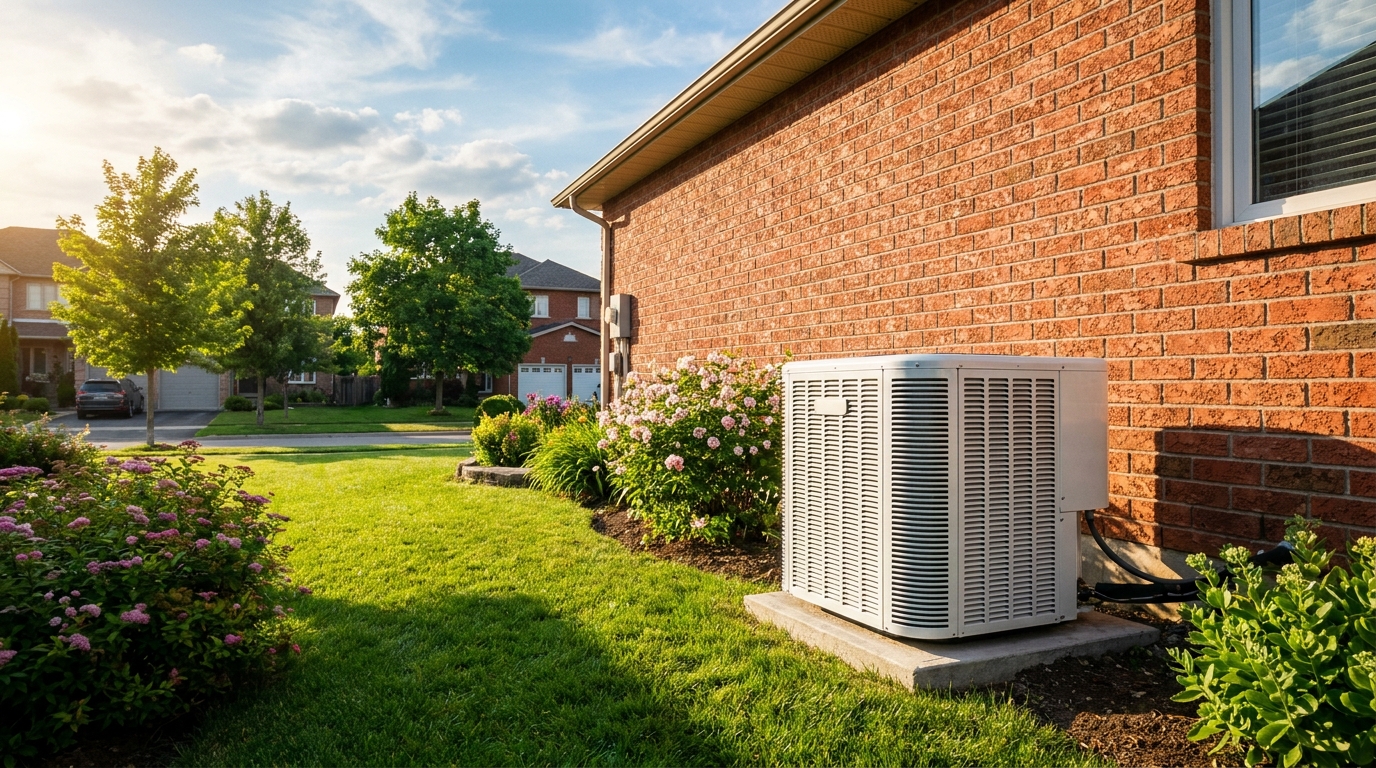
Last Tuesday I pulled a 19-year-old Carrier out of a Mississauga semi-detached. The compressor still ran, barely, but the R-22 refrigerant inside hasn’t been manufactured in years. The homeowner’s face dropped when I quoted the recharge cost: $1,400 for a gas that’s essentially extinct. She could’ve avoided that bill entirely if she’d replaced the unit two summers ago when R-410A deals were everywhere.
That window is closing fast. 2026 marks the biggest shift in Ontario’s residential cooling market in over a decade. New refrigerants, expanded provincial rebates, rising install costs, and tighter TSSA inspection rules are changing the math for every GTA family shopping for central air.
I’m Terence, and after 20-plus years installing and servicing HVAC systems from Scarborough basements to Richmond Hill estates, I’ve written this guide specifically for Ontario families navigating the 2026 landscape. This isn’t a brand-by-brand deep dive (I’ve already published that as a detailed three-part series). This is your practical roadmap: what’s changed, what it costs, what rebates you can grab, and how to avoid the mistakes I see every summer.
What’s Changed in 2026 (vs 2025)
If you priced an AC last summer, throw those numbers out. Here’s what shifted:
Refrigerant transition is now real. R-410A production quotas dropped again in January 2026 under Canada’s hydrofluorocarbon phase-down schedule. Most manufacturers have moved their 2026 lineups to R-32 or R-454B. You can still find R-410A units in stock, but inventory is thinning and wholesale prices jumped 15 to 20 percent since last fall.
Install costs climbed $200 to $400. The new refrigerants (R-32 and R-454B) are classified A2L, mildly flammable. That means installers need updated tools, leak detectors rated for flammable gases, and additional training hours. Those costs get passed to you.
TSSA tightened inspection rules. Ontario’s Technical Standards and Safety Authority now requires documented leak testing and ventilation assessments for any A2L refrigerant install. Your installer needs to file paperwork that didn’t exist 18 months ago.
Rebates expanded significantly. Ontario’s Home Renovation Savings Program increased maximum HVAC rebates to $12,000 for qualifying heat pump and high-efficiency AC systems. Enbridge and local hydro utilities added their own stacking incentives.
Hydro rates keep climbing. Ontario’s time-of-use peak rate hit 18.2¢/kWh in May 2026. A 14-SEER unit costs roughly $380 to $520 per summer to run in the GTA. Bump to 18 SEER and that drops to $260 to $370. The efficiency gap now saves you $100-plus each cooling season.
2026 Installed Prices: What Ontario Families Actually Pay
These are real ballpark figures I’m seeing across the GTA this spring, taxes included, for a standard residential install on an existing ductwork system.
| Tier | Brands | 2026 Installed Price | Typical SEER | Monthly Rental |
|---|---|---|---|---|
| Premium | Lennox Signature/Elite, Carrier Infinity | $3,200 to $5,800 | 17 to 20.5 | $49 to $70/mo |
| Mid-Range | Lennox Merit, Carrier Performance/Comfort, Trane, American Standard | $2,400 to $3,800 | 14 to 17 | $38 to $55/mo |
| Value | Goodman, Keeprite, Amana, York, ComfortStar | $1,900 to $2,600 | 13.5 to 15.5 | $35 to $45/mo |
What’s driving costs up from 2025:
- R-32/R-454B equipment carries a $150 to $300 manufacturer premium over equivalent R-410A models
- A2L-rated install labour adds $100 to $200
- Supply chain normalization brought some material costs down, partially offsetting the above
Financing reality check: Most GTA dealers offer rental (you never own it) or financing (you own it after payments). Rental looks cheaper monthly but costs significantly more over 10 years. If you plan to stay in your home longer than 5 years, financing or outright purchase almost always wins.
Ontario Rebates and Incentives in 2026

This is where 2026 gets interesting. Stack these programs correctly and you can knock $3,000 to $7,000 off a qualifying system.
Provincial Programs
Home Renovation Savings Program (Ontario government)
- Up to $12,000 for qualifying heat pump or high-efficiency HVAC upgrades
- Minimum 16 SEER required for central AC rebates
- Must use a TSSA-certified installer
- Apply within 6 months of installation. Keep all receipts and the installer’s TSSA licence number
Save on Energy Retrofit Program
- $250 to $800 for central AC upgrades meeting efficiency thresholds
- Available province-wide through local utility participation
Utility-Specific Rebates
Enbridge Gas (if you have gas heating)
- $500 to $2,000 for bundled HVAC upgrades (AC plus furnace or heat pump)
- Stacks on top of provincial rebates
Toronto Hydro / Hydro One / Hydro Ottawa
- Check your specific utility. Rebates vary from $200 to $600 for high-efficiency cooling equipment
- Some utilities offer enhanced rebates for off-peak installation scheduling
How to Actually Get the Money
- Confirm your installer is TSSA-certified before signing anything
- Request ENERGY STAR documentation and the unit’s AHRI certificate
- Keep the original invoice showing make, model, SEER rating, and refrigerant type
- Apply to the provincial program first (largest amount), then stack utility and Enbridge rebates
- Budget 6 to 12 weeks for processing. Some programs pay by cheque, others by bill credit
Quick Brand Comparison for 2026
Here’s the snapshot. I’ve rated each brand based on what I’ve seen across thousands of GTA installs and service calls.
| Brand | 2026 Price Range (Installed) | SEER Range | Best For | Terence’s Rating |
|---|---|---|---|---|
| Lennox | $2,300 to $5,800 | 14.5 to 18.5 | Families wanting long-term quiet reliability | 9.6/10 |
| Carrier | $2,400 to $5,500 | 14 to 20.5 | Homes where silence and precision matter most | 9.5/10 |
| Goodman | $1,900 to $2,500 | 14 to 15 | Budget-conscious, simple, easy to fix anywhere | 9.4/10 |
| Trane/Am. Std. | $2,100 to $2,600 | 14.75 to 16 | People who keep homes for 20-plus years | 9.3/10 |
| Keeprite | $1,900 to $2,400 | 14 to 17 | Working families wanting Carrier DNA at lower cost | 9.3/10 |
| Amana | $2,400 to $2,600 | 15 | Goodman quality with quieter operation | 9.2/10 |
| Armstrong Air | $2,300 to $2,500 | 16 | Lennox manufacturing lineage at mid-range pricing | 9.2/10 |
| York | $2,100 to $2,200 | 14 | Rental properties, short-term needs, tight budgets | 9.0/10 |
| ComfortStar | $1,900 to $2,000 | 13.5 | Absolute lowest upfront cost with decent durability | 9.0/10 |
2026 brand notes: Lennox and Carrier have fully transitioned their new-production lines to R-32/R-454B. Goodman and Keeprite still have R-410A stock available on select models but expect that to dry up by fall. Trane’s Canadian market share remains small, which means fewer local parts on shelves.
Want the full story on each brand? I’ve written a comprehensive three-part series with model-by-model breakdowns, pricing for every tier, and honest technician opinions:
The R-32 and R-454B Reality: What Ontario Homeowners Need to Know
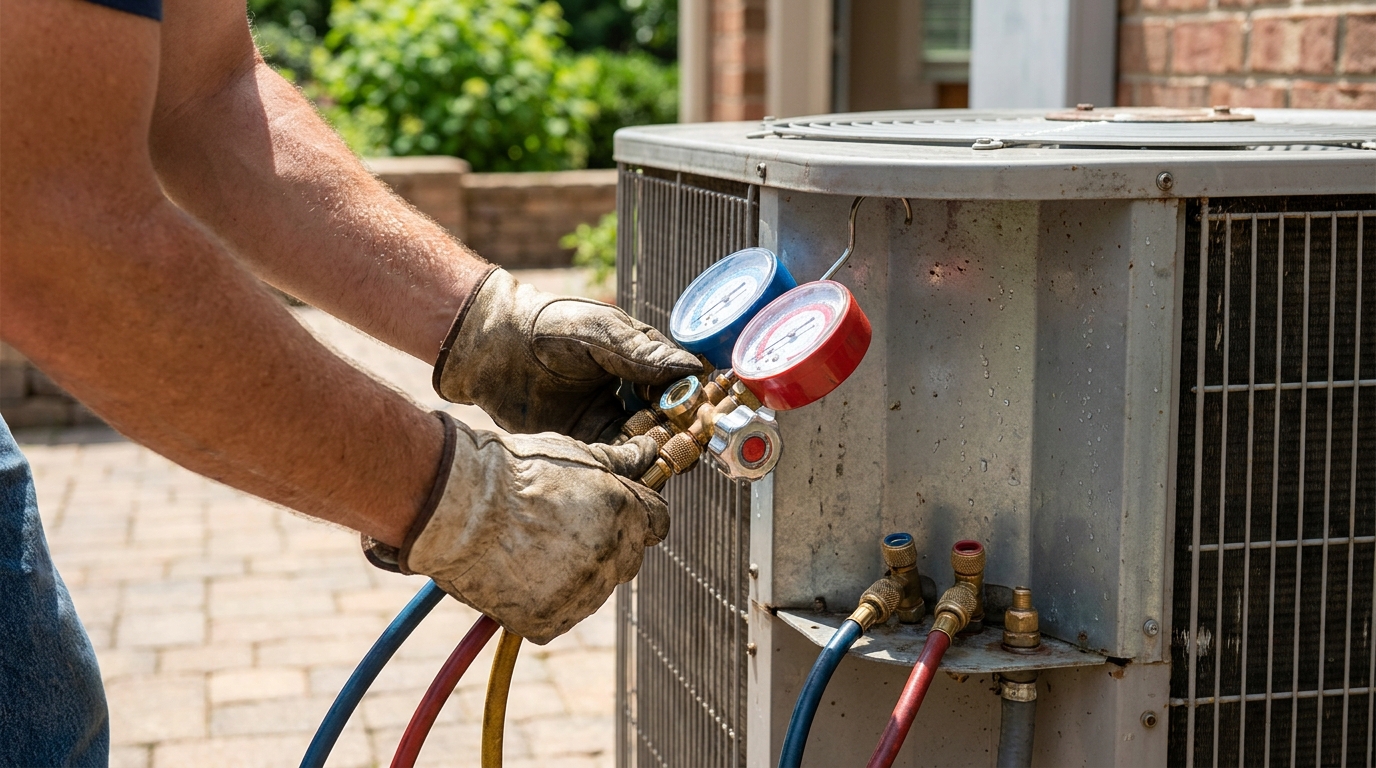
Forget R-22. Even R-410A is on its way out. Here’s the practical impact for your wallet and your home.
R-32 is the most common replacement. It’s more energy-efficient than R-410A (lower GWP of 675 vs 2,088), which means your system uses less refrigerant per charge cycle. The trade-off: R-32 is classified A2L (mildly flammable), so your installer needs proper ventilation calculations and leak detection equipment.
R-454B (sold under the brand name Opteon XL41) is Carrier’s preferred transition refrigerant. Similar A2L classification, GWP of 466. Slightly less efficient than R-32 in some applications but with a better safety profile in tight mechanical rooms.
What this means for your purchase decision:
- If you find an R-410A unit in stock at a good price, it’s still a perfectly solid choice. R-410A service and top-up will remain available for years, just at rising cost
- New-production R-32 or R-454B units will be standard by late 2026. You’re not an early adopter anymore, you’re buying the new normal
- Install costs for A2L systems run $100 to $200 higher due to additional safety requirements
- Your existing ductwork and thermostat are compatible. The refrigerant change affects the outdoor unit and linesets, not your indoor infrastructure
My honest take: For most Ontario families buying in summer 2026, go with whatever your trusted installer recommends between R-32 and R-454B. Both work well. The price difference between them is negligible. Don’t let a salesperson scare you into overpaying for “the safer option” because at the residential level, the practical risk difference is minimal.
How to Choose: 5-Step Decision Framework
Step 1: Size It Right
An oversized AC cycles on and off too quickly, wastes hydro, and leaves your home humid. An undersized unit runs constantly and still can’t keep up on 35°C days in July.
Proper sizing requires a Manual J heat load calculation, not a guess based on square footage alone. Your installer should factor in insulation quality, window count and orientation, ceiling height, and how many people live in the home. A Vaughan townhouse with south-facing windows needs very different cooling than a shaded Oakville bungalow.
If your installer quotes a size without stepping inside your home, find a different installer.
Step 2: Set Your Real Budget
Don’t just look at the sticker price. Calculate total cost of ownership over 10 years:
- Purchase and installation cost
- Minus rebates (often $1,500 to $5,000 when stacked properly)
- Plus annual maintenance ($150 to $250/year)
- Plus estimated hydro cost (SEER rating drives this)
A $3,200 unit at 17 SEER often costs less over 10 years than a $2,000 unit at 14 SEER once you factor in hydro savings and available rebates. Run the numbers before you commit.
Step 3: Check Your Existing System
Before buying new, have a technician inspect your furnace, ductwork, and electrical panel. A new AC paired with a 25-year-old furnace and leaky ducts won’t deliver the comfort or efficiency you’re paying for. Sometimes spending an extra $300 on duct sealing doubles the benefit of your new unit.
Step 4: Get Three Quotes Minimum
Never sign with the first contractor who knocks on your door. Get three written quotes that each specify: exact make and model, SEER rating, refrigerant type, warranty terms, and total installed price including permits. Compare line by line, not just bottom-line numbers.
Step 5: Verify Timing and Availability
R-410A stock is unpredictable. Some models sell out mid-season. If you’ve chosen a specific unit, confirm availability before signing. And read the next section on seasonal pricing because when you buy matters almost as much as what you buy.
Choosing Your Installer: The Step Most People Get Wrong
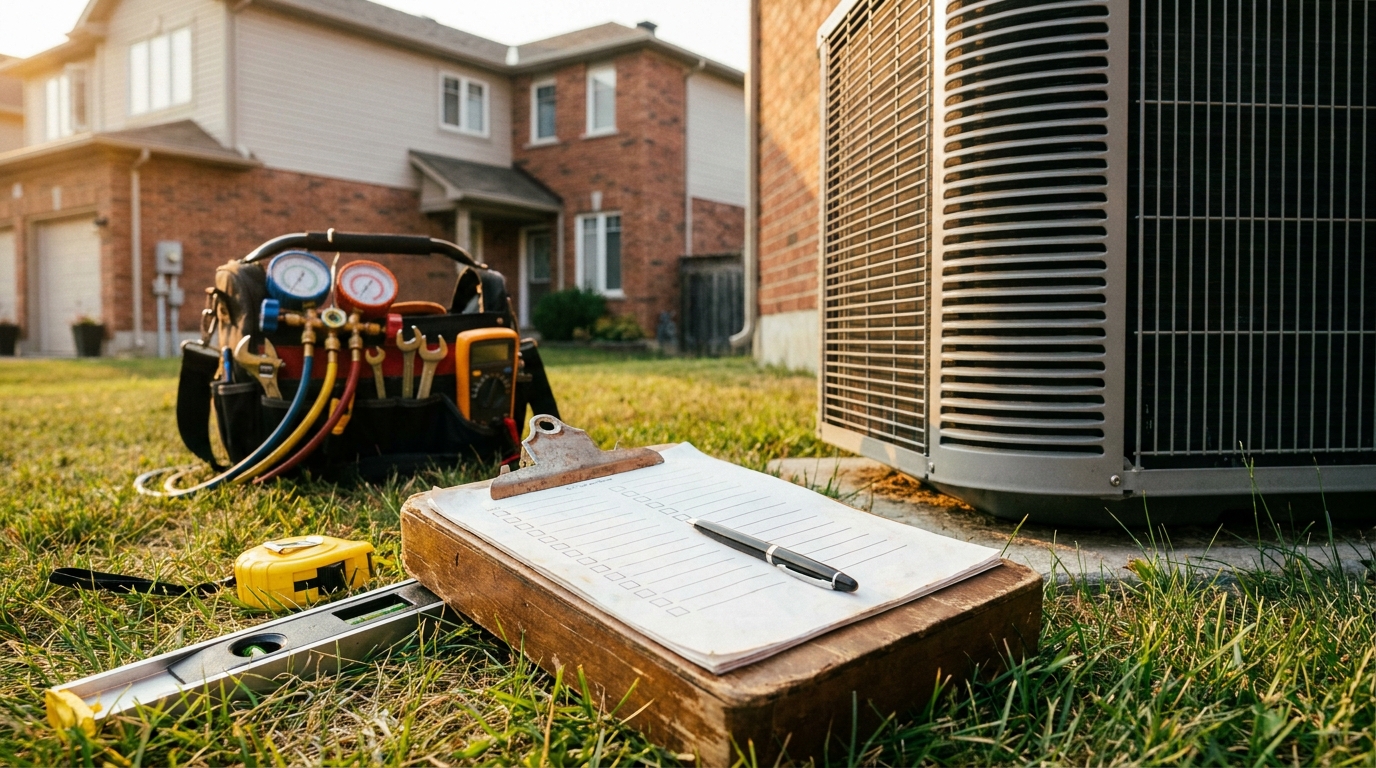
I’ve said it a thousand times: a mid-range unit installed by a skilled technician outperforms a premium unit with a sloppy install. Every single time.
Non-negotiable requirements for your Ontario installer:
- TSSA certification — This is legally required in Ontario for refrigerant handling. No certification, no hire. Verify the licence number on TSSA’s website
- A2L refrigerant training — If you’re getting an R-32 or R-454B unit, your installer must have completed manufacturer or industry training for flammable refrigerant handling. Ask to see the certificate
- Manual J load calculation — They must measure your home before recommending a size. “Same size as your old one” is not an answer
- Written warranty on labour — Equipment warranty covers parts. Labour warranty covers the installer’s work. Get both in writing. Minimum 1 year on labour, ideally 2
Red flags that should make you walk away:
- Quotes a price over the phone without seeing your home
- Can’t explain which refrigerant the unit uses
- Doesn’t pull a permit for the installation
- Pressures you to sign today with a “limited time” discount
- Won’t provide references from recent Ontario installs
At Canada Energy Solution, we handle installations across the GTA with TSSA-certified technicians, proper load calculations, and written labour warranties. But whatever company you choose, hold them to these same standards.
When to Buy: Ontario’s Seasonal Pricing Calendar
| Month | Demand | Price Level | Availability | Verdict |
|---|---|---|---|---|
| Jan to Mar | Very low | Lowest prices | Full stock | Best time to lock in a deal |
| Apr to May | Rising | Moderate | Good stock | Smart window. Good selection, reasonable prices |
| June | High | Prices firm up | Starting to thin | Last comfortable window before peak |
| Jul to Aug | Peak | Highest prices | Limited, long waits | Worst time to buy unless your system fails |
| Sep to Oct | Dropping | Clearance deals | Leftover inventory | Good deals if preferred model is available |
| Nov to Dec | Low | Good prices | Moderate | Plan ahead for next summer |
My recommendation: If you’re reading this in May or June 2026, don’t wait for July. Book your install now. I’ve watched families in Brampton and Markham wait through 38°C heat waves for a two-week installation backlog that could’ve been a two-day job in April.
Frequently Asked Questions
Q: My AC still uses R-22. Can I just recharge it and keep going?
You can, but R-22 now costs $80 to $150 per pound in Ontario, and a typical recharge needs 4 to 8 pounds. You’re looking at $400 to $1,200 for a gas that’s no longer produced, going into a system that’s likely 15-plus years old. At that point, the recharge cost is better spent toward a new unit with a 10-year warranty and dramatically lower hydro bills.
Q: Do I need to replace my furnace when I replace my AC?
Not always, but often yes. Your AC’s evaporator coil sits on top of your furnace, and they need to be matched for efficiency. A new 17-SEER AC paired with a 15-year-old single-speed furnace won’t deliver 17-SEER performance. If your furnace is older than 12 years, seriously consider replacing both. Bundled installs also qualify for larger rebates.
Q: Are R-32 units safe for homes with small children or pets?
Yes. R-32 is classified A2L (mildly flammable), but “mildly” is the key word. It requires an ignition source and a specific concentration to ignite, conditions that essentially don’t occur in a normal residential setting. The outdoor unit where the refrigerant lives is in open air. Indoor exposure risk is negligible when installed per TSSA code requirements.
Q: What SEER rating makes financial sense for the GTA specifically?
For the Greater Toronto Area’s climate (roughly 600 to 800 cooling hours per year), 15 to 17 SEER hits the sweet spot. Below 15, you’re leaving hydro savings on the table. Above 18, the payback period stretches past 12 years in our climate because we simply don’t run AC as many hours as homes in Texas or Florida.
Q: Can I install a central AC if my home only has a boiler (no ductwork)?
Yes, but you’ll need either a ductless mini-split system or a full duct installation. Adding ductwork to an existing home typically costs $3,000 to $7,000 depending on layout. A ductless system avoids that cost but won’t distribute air as evenly. Talk to your installer about both options and get quotes for each. We cover both approaches in our AC installation services.
Q: How long does a typical installation take?
A standard swap (removing old unit, installing new unit on existing ductwork and electrical) takes 4 to 8 hours. If you’re adding new linesets, upgrading electrical, or installing ductwork, expect 1 to 2 days. Emergency installs during peak summer can stretch to 3 days due to scheduling backlogs.
Resources for Ontario Homeowners
- TSSA (Technical Standards and Safety Authority) — Verify installer licensing, report safety concerns
- Natural Resources Canada — ENERGY STAR ratings, energy efficiency benchmarks
- Ontario Save Energy Home — Provincial rebate finder by postal code
- Save on Energy — Ontario-wide energy rebates and incentives
- Enbridge Gas Rebates — Gas and hybrid heating rebate programs
- HRAI — Consumer HVAC tips and contractor directory
- Efficiency Canada — Latest energy policy trends and HVAC innovations
Ready to Talk?
After two decades in the field, I’ll tell you straight: the brand badge matters less than the install quality, the sizing accuracy, and the maintenance plan you stick to afterward. A properly installed mid-range unit with annual tune-ups will outlast and outperform a premium unit that was rushed in during a July heat wave.
If you’re ready to discuss the right central air conditioner for your Ontario home, or if you want a second opinion on a quote you’ve already received, we’re here.
Contact Canada Energy Solution for a free in-home assessment. We serve the entire GTA, from Etobicoke to Pickering, Vaughan to Burlington, and everywhere in between. TSSA-certified technicians, proper load calculations, written warranties. No pressure, no gimmicks.
You can also reach us for AC repair and service if your current unit needs attention before you’re ready to replace.
Terence is a Senior HVAC Technician at Canada Energy Solution with over 20 years of experience serving homes and businesses across the Greater Toronto Area. This guide reflects his personal, unsponsored opinions based on thousands of installations and service calls.
Terence's HVAC Advice Series
- HVAC Emergency After Hours: What to Do When Your Furnace or AC Stops Working
- 2026 Central AC Installation Cost in Toronto: Full Breakdown and What to Expect
- Ductless Mini-Split vs Central Air: Which Is Right for Your GTA Home?
- What Size Air Conditioner Do I Need for My Toronto Home?
- Canada’s 10 Best Air Conditioner Brands & Models Reviewed in 2025 and 2026 — Part 3: Comprehensive Buying Guide
- When Tragedy Strikes Home, a Community Must Rise – Standing with the Cristillo Family
- Canada’s 10 Best Air Conditioner Brands & Models Reviewed in 2025 and 2026 — Part 2: Our Top HVAC Technician Picks and Honest Model Recommendations
Recent Posts

SickKids Needs You Right Now
HVAC Emergency After Hours: What to Do When Your Furnace or AC Stops Working
Andrew’s Law Is Now Ontario Law: One Year Later, a Family’s Fight Has Made Our Roads Safer
2026 Central AC Installation Cost in Toronto: Full Breakdown and What to Expect
Ductless Mini-Split vs Central Air: Which Is Right for Your GTA Home?


Get a Free Consultation
Our Community Contributions

SickKids Needs You Right Now
Andrew’s Law Is Now Ontario Law: One Year Later, a Family’s Fight Has Made Our Roads Safer

When Tragedy Strikes Home, a Community Must Rise – Standing with the Cristillo Family


