
Bathroom fan dripping? I’d check the duct first
Attic Talk with Mike Sullivan, attic insulation specialist at Canada Energy Solution
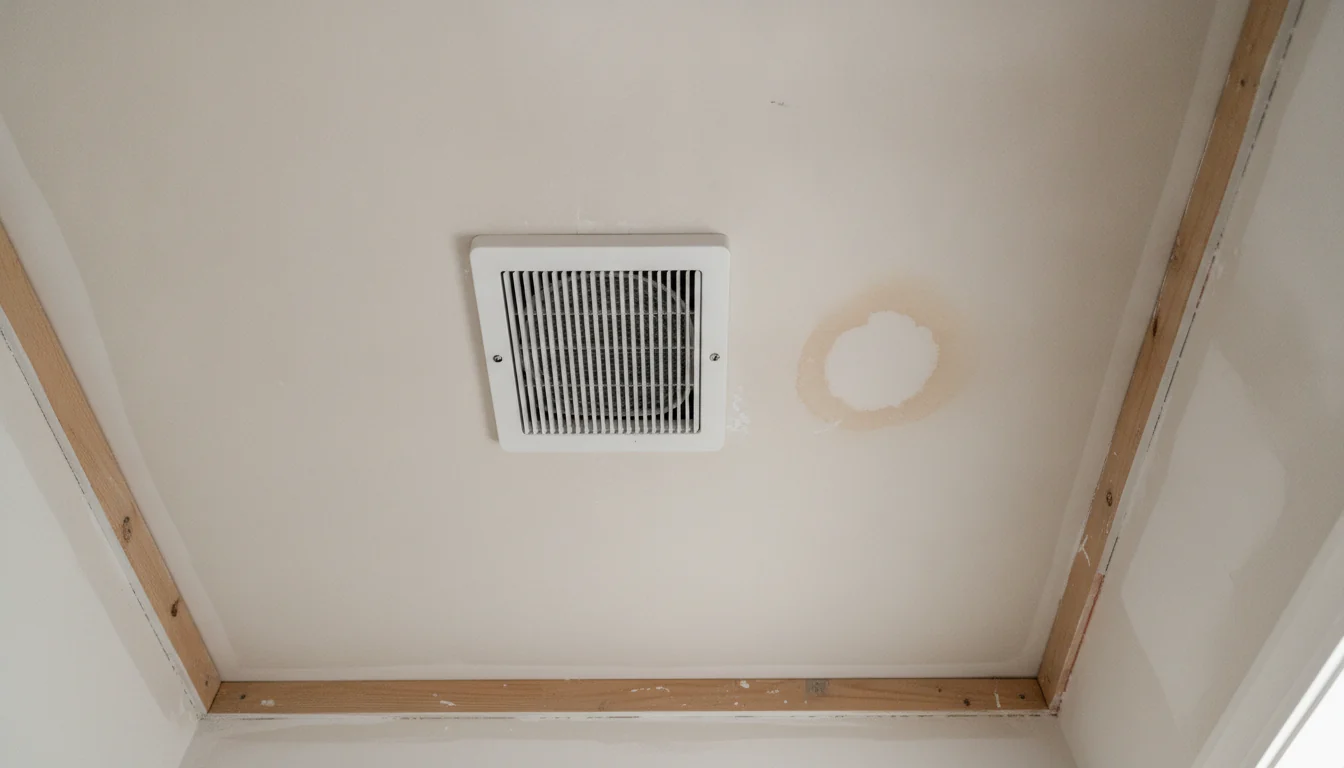
A drop hanging from the fan grille.
If you’ve just noticed it after a shower, I can see why you’d start looking at replacement fans. You’re running the thing to get moisture out of the bathroom, and now it’s giving you water back. Perhaps a bigger one would do the job.
I’d keep that purchase on hold until someone has followed the duct above the ceiling. A working fan can send warm, damp air into a cold duct, where water forms and collects. Depending on the route, some of it can find its way back to the grille. Replacing the motor leaves that part of the installation exactly as it was.
The fan might still need replacing. I just wouldn’t let the drip make that decision for you.
The part above the ceiling
In a cold Toronto winter, the attic can be a very different place from the bathroom below it. Shower air travels into that space through the exhaust duct. If it meets a cold surface inside the run, moisture can turn into water, much as it does on the outside of a cold glass. A sag in the duct gives the water somewhere to sit.
That helps explain an otherwise puzzling drip when it hasn’t rained. It doesn’t prove that’s what is happening in your bathroom.
For the person investigating, the awkward bit may be well away from the fan: a crushed section behind framing, missing duct insulation, or an end that never quite reaches its outdoor outlet. A tidy connection above the bathroom won’t rule those out. Natural Resources Canada’s attic advice on exhaust ducts describes protecting the run against condensation and crushing, and taking the exhaust outside.
I’d be especially unhappy to find an open duct aimed towards a roof vent. Close enough to an opening isn’t a finished connection. Damp air can spill into the roof space before it gets out, leaving the attic with a moisture problem as well as the bathroom.
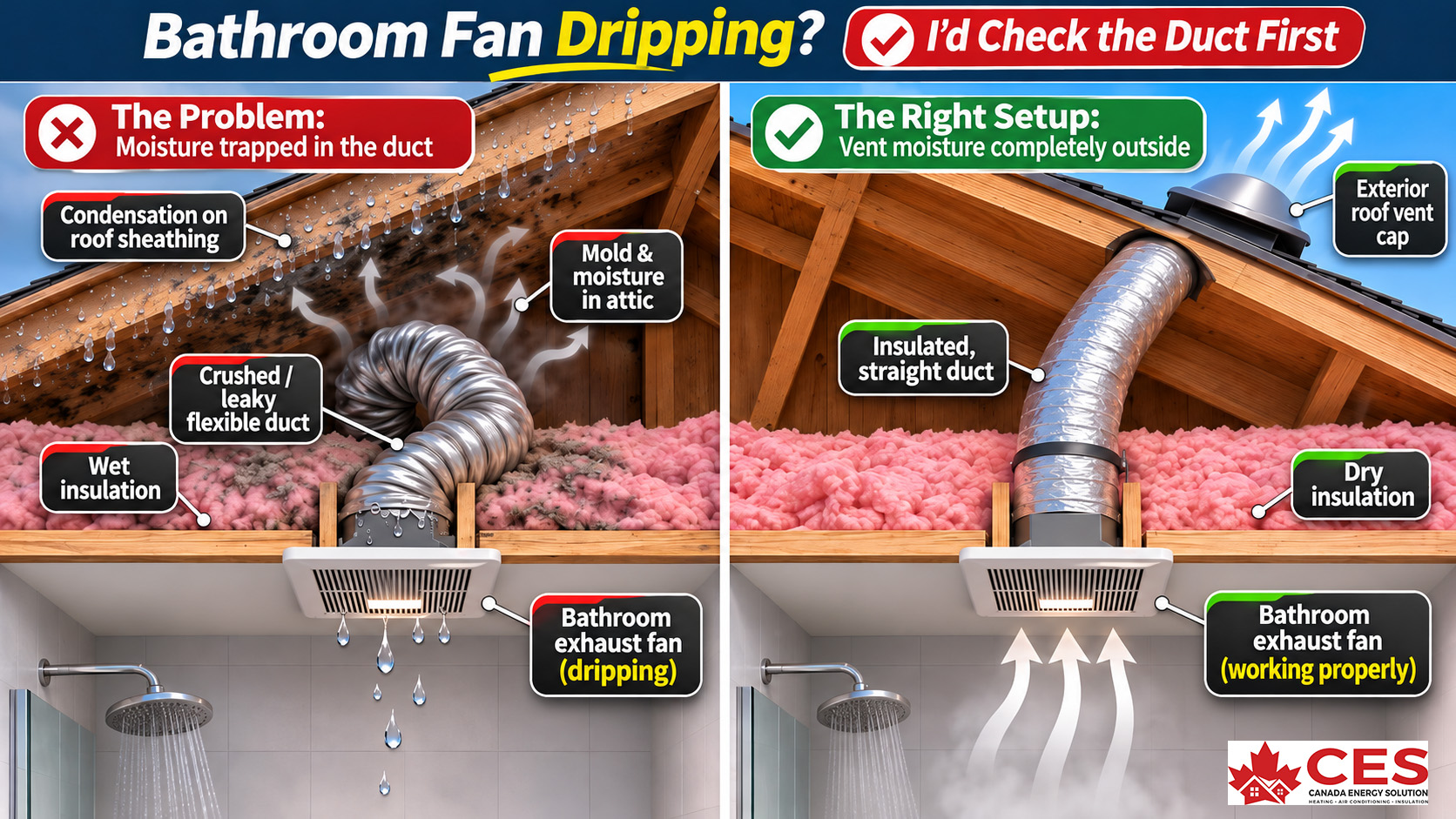
Bathroom exhaust duct comparison: a crushed flexible run on the left and an insulated run connected to a roof vent on the right. Concept diagram, not to scale.
When you noticed it matters
A drip after a shower on a freezing evening gives the investigator a different starting point from water arriving during wind-driven rain. But water doesn’t always appear where it entered. It can track along framing or sit in a low section of duct before showing up in the bathroom.
This is where a few ordinary observations help. A photograph of the wet grille, when you took it, whether the shower had been used, and what the weather was doing are worth passing on. You can record all of that from the bathroom floor. Nobody needs to squeeze through the attic hatch or climb onto the roof to help with the diagnosis.
If water is reaching the fan’s electrical parts, leave it alone and get qualified help. Photographing a ceiling stain is one thing; opening a wet fitting is another.
A dark patch deserves attention too, though I can’t tell you from a photo whether it’s mould. The first concern is still the water. Health Canada’s advice on moisture and mould makes the same point about correcting the source. Cleaning the grille and repainting might make the bathroom look better while leaving the cause untouched.
A fan you can hear may still be struggling
It’s fair to ask whether the fan is being left on long enough after a shower. I’d also want to know whether the installation is letting it do its job. Telling you to run it longer seems premature if the duct is crushed or the outdoor outlet is stuck.
The sound of the motor doesn’t tell us how much air is moving. The bathroom also needs a route for replacement air to enter as the fan draws air out, part of how household ventilation works. A higher airflow rating on a new box won’t explain what’s restricting the existing system.
Once that has been checked, the operating instructions become useful. Health Canada’s ventilation advice supports using bathroom exhaust to manage moisture; the equipment instructions help with how to operate your particular fan. I wouldn’t prescribe the same timer setting to every household, or expect a timer to fix a bad connection.
Before we bring in the insulation hose
If you’re arranging attic insulation work as well, tell us about the dripping fan before the visit. A roofer may need to deal with the cap or flashing. An exhaust-system contractor may need room to reroute the duct. Finishing the loose fill first can leave the next person moving fresh material aside to reach a problem that was already there.
The duct’s own insulation needs to be suitable too. Choosing insulation for its intended application matters here. Blowing more material onto the attic floor doesn’t, by itself, tell me the exhaust run has been dealt with.
Before scheduling our part, I want to know who is doing the repair and what access they need. Photos taken while the connections are still visible can help explain the work. Once they’re buried under fresh insulation, a finished photo tells you much less. That is worth sorting out beforehand, even if it means changing the order of the appointments.
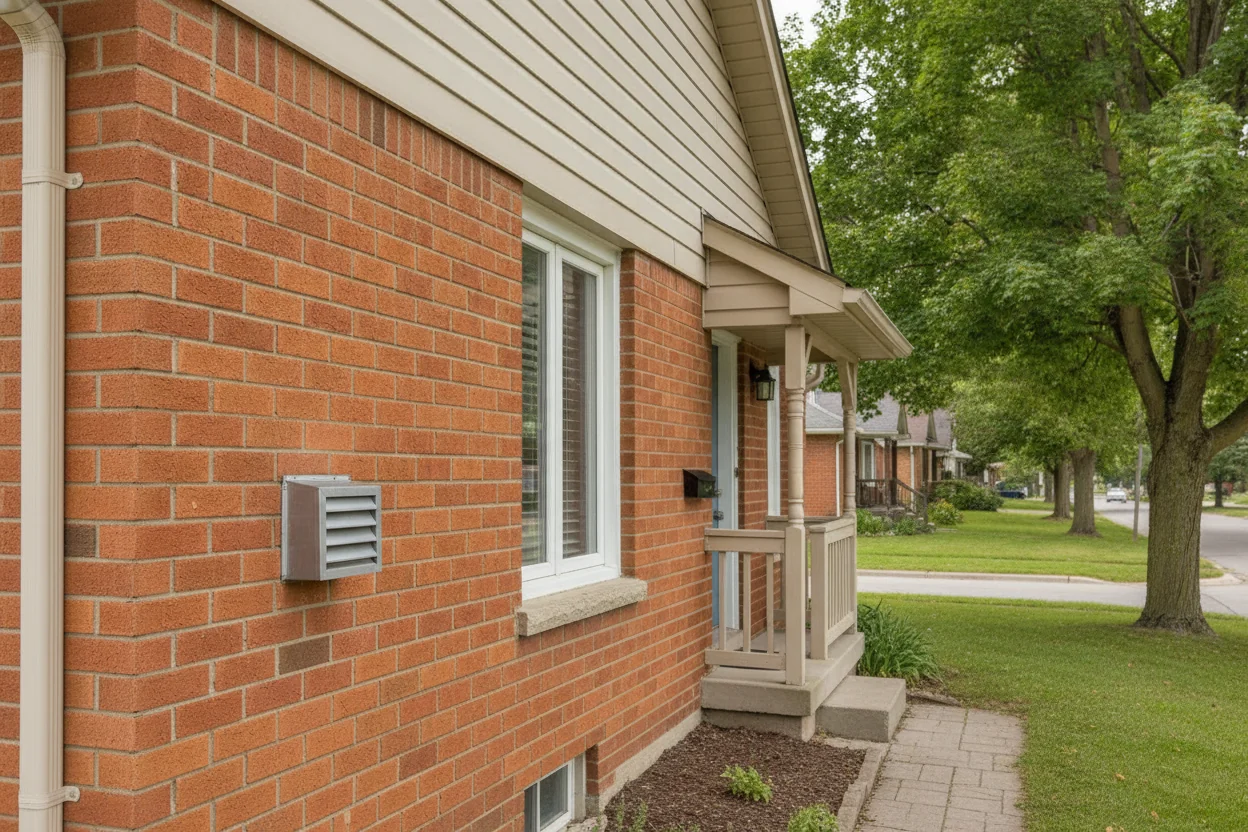
Metal vent on a red-brick exterior wall beneath a window. Illustration, not a CES project photograph.
You can request a free attic assessment through Canada Energy Solution at (647) 812-5200. Mention the water when booking so the team can discuss whether another trade needs to be involved before the insulation visit.
I’m comfortable leaving a top-up until a known duct repair is finished. You shouldn’t have to disturb new insulation to get at the same drip a few weeks later.
Attic Talk with Mike
- No attic vapour barrier? Don’t rush to remove the ceiling
- New attic insulation, but upstairs is still hot
- Old attic insulation: remove it or top up?
- Is Attic Insulation Actually Worth It? A Toronto Contractor Answers Reddit’s Biggest Question
- Open-Cell vs Closed-Cell Spray Foam: Which One Does Your Attic Actually Need?
- Spray Foam vs Blown-In Cellulose: An Ontario Contractor’s 18-Year Verdict
- DIY Attic Insulation vs Hiring a Pro: Which Saves You More Money in the Long Run?
Recent Posts

SickKids Needs You Right Now
HVAC Emergency After Hours: What to Do When Your Furnace or AC Stops Working
Andrew’s Law Is Now Ontario Law: One Year Later, a Family’s Fight Has Made Our Roads Safer
2026 Central AC Installation Cost in Toronto: Full Breakdown and What to Expect
2026 Central Air Conditioner Buyer’s Guide for Ontario: Updated Prices, Rebates & Expert Picks


Get a Free Consultation
Our Community Contributions

SickKids Needs You Right Now

Andrew’s Law Is Now Ontario Law: One Year Later, a Family’s Fight Has Made Our Roads Safer

When Tragedy Strikes Home, a Community Must Rise – Standing with the Cristillo Family


