
Attic wiring and insulation: before you cover it up
Attic Talk with Mike Sullivan, attic insulation specialist at Canada Energy Solution
Six years after having pot lights installed, a homeowner on Reddit went into the attic to investigate a problem between two switches. Under the insulation, they found two crowded junction boxes. One was so full that the lid wouldn’t close properly.
When a lighting job comes up during an attic assessment, I ask where the electrician worked before I talk about adding insulation. Picture a GTA bungalow with the hatch in the hall and the new lights over the kitchen. From downstairs, you’d think the job stopped at the kitchen door. Up in the attic, the electrician may have crossed the hall and the ceiling over the next room to get to the wiring. I want to know where they went and what they moved, because a glance through the hatch won’t show me the whole route.
Two lights can look identical from the kitchen
Say you add pot lights over the counter and leave the ones over the sink alone. From below they’re nearly a match. Above the ceiling, the older lights may have housings that need insulation kept away, even with LED bulbs fitted. The new fixtures have their own ratings and instructions. I want the electrician to identify both sets before the insulation goes back, because the proposed depth can change what touches a fitting that nobody replaced.
An Ontario homeowner planning to install a bathroom heat lamp had two good questions: what could the loose fill touch, and how would anyone find the separate junction box later? An IC rating tells you about insulation contact for that piece of equipment, subject to its instructions. It says nothing about the older fitting beside it. Natural Resources Canada warns against covering recessed fixtures that aren’t designed for it. I leave that call to the electrician who can identify what’s actually installed.
The photo I want shows the way back
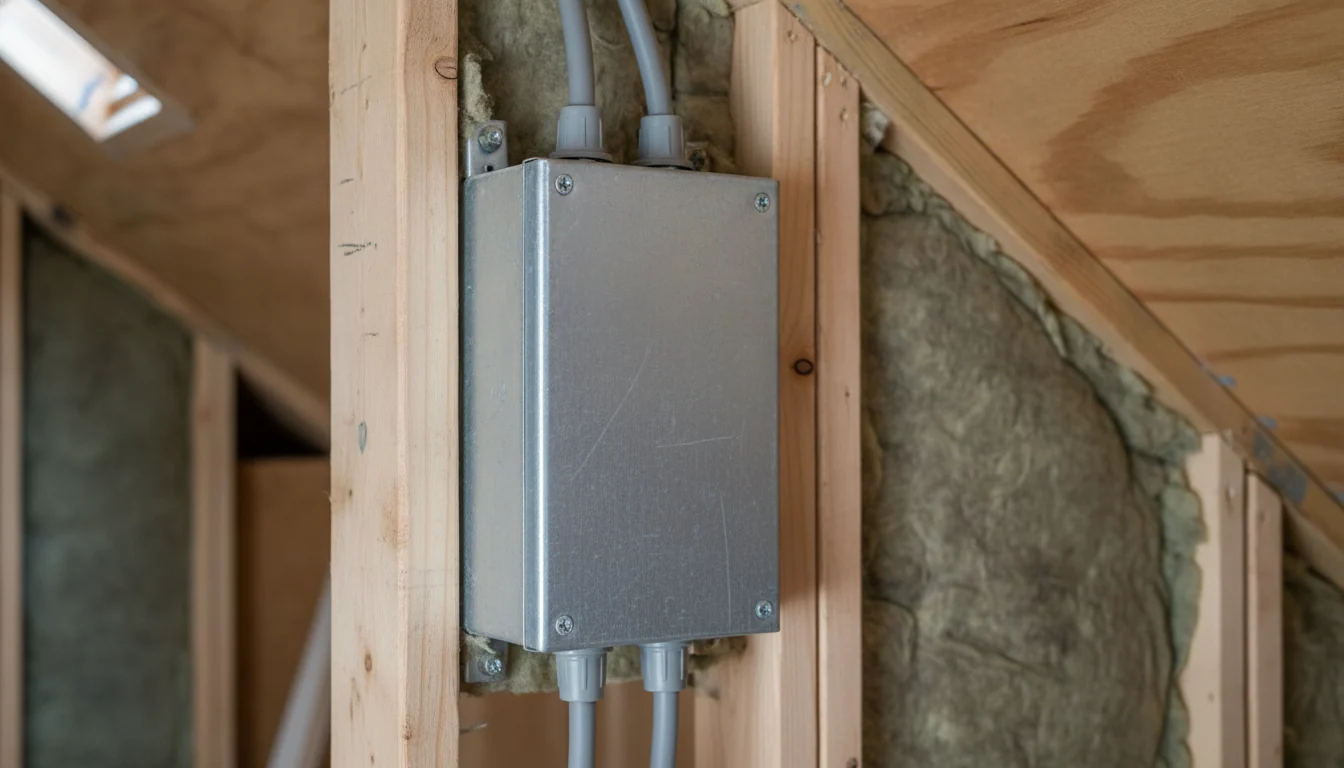
A close-up of a grey lid can tell you which box you were looking at that day. It may be useless to the person standing at the hatch with a light six winters later. I ask the electrical contractor for a wider photo with a fixed landmark in it, or a note that ties the box to the hatch and a room below. If I can see the box now but the new loose fill will sit well above the joists it’s mounted on, that’s the time to ask the Licensed Electrical Contractor how it will be reached after the job. A photo helps someone find it. It can’t make the lid reachable.
There’s one detail I’d put in writing: which part of the attic is ready for insulation. In Ontario, if the job is at the ESA rough-in stage, wiring that needs to be seen stays uncovered until ESA authorizes concealment. Ask the electrical contractor to confirm that before you book the insulation day. If the crew spots what might be old knob-and-tube wiring in the area they’re due to cover, I’d put that part of the job on hold. The paperwork for the new kitchen circuit won’t tell you whether the old wiring is still in use.
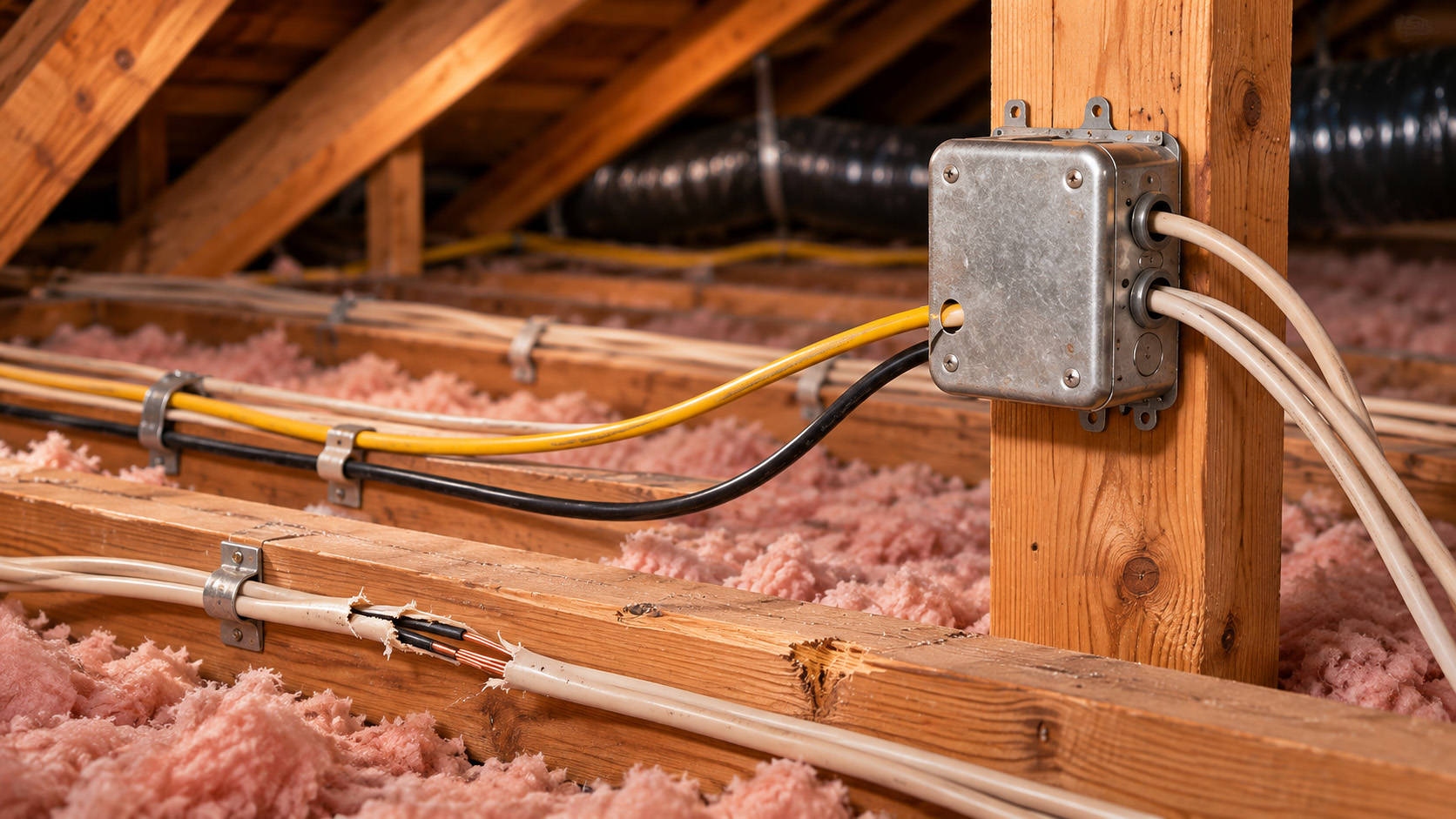
A metal electrical box and coloured cables on timber framing, with pink insulation between the joists.
A bare strip isn’t a reason to buy a whole attic
My first look is at the route the electrician used. If there’s a shallow strip from the hatch to the kitchen and the surrounding insulation is dry, even and in good condition, I’d price restoring that strip separately from a top-up. Before I recommend blowing more across the attic, I’d check the depth away from the work too. A thin patch the electrician left behind tells me very little about the insulation over the bedrooms.
I’d look at the ceiling beneath that route while it’s accessible. If the electrician moved a light and left an opening around the new cable, the crew needs to know who will address that detail before the insulation is restored. Loose fill doesn’t seal a ceiling air leak. The distinction matters most on a cold day, when warm indoor air can carry moisture into the attic through the opening, even with a fresh layer of insulation over it.
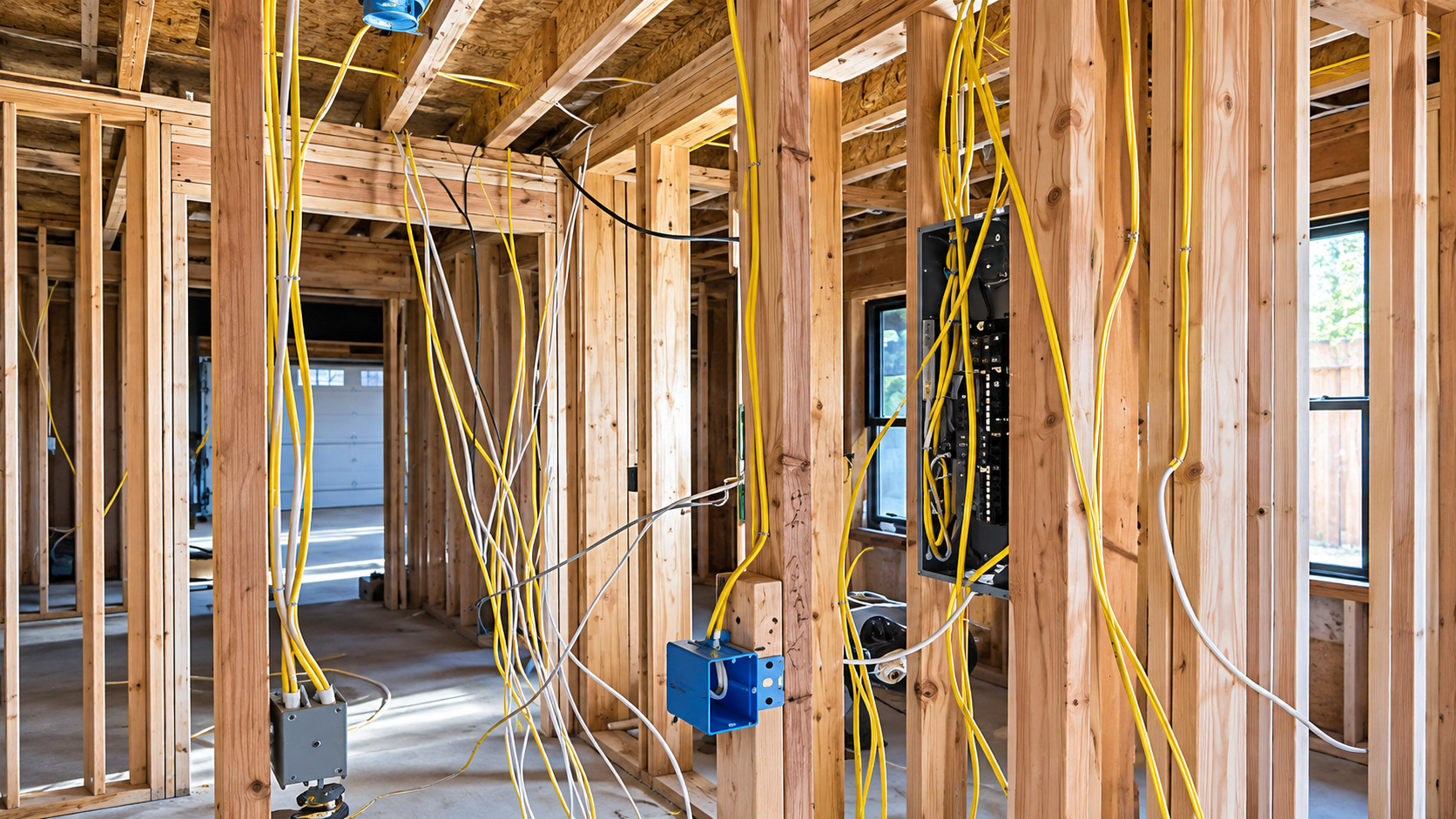
Yellow and white cables run through exposed wall and ceiling framing, with blue electrical boxes visible.
If you’ve just had wiring or lighting work done, bring the electrical contractor’s notes when you book a free attic assessment at (647) 812-5200. We can look at what needs to be restored or topped up without asking you to climb in and trace the route. Before the insulation crew arrives, get the electrician to show them where the work ends and what has to stay reachable. That conversation belongs on the schedule while everything is still in view.
Attic Talk with Mike
- Insulate existing walls without removing the drywall?
- Attic insulation or solar panels first?
- No attic vapour barrier? Don’t rush to remove the ceiling
- New attic insulation, but upstairs is still hot
- Bathroom fan dripping? I’d check the duct first
- Old attic insulation: remove it or top up?
- Is Attic Insulation Actually Worth It? A Toronto Contractor Answers Reddit’s Biggest Question
Recent Posts

SickKids Needs You Right Now
HVAC Emergency After Hours: What to Do When Your Furnace or AC Stops Working
Andrew’s Law Is Now Ontario Law: One Year Later, a Family’s Fight Has Made Our Roads Safer
2026 Central AC Installation Cost in Toronto: Full Breakdown and What to Expect
2026 Central Air Conditioner Buyer’s Guide for Ontario: Updated Prices, Rebates & Expert Picks


Get a Free Consultation
Our Community Contributions

SickKids Needs You Right Now

Andrew’s Law Is Now Ontario Law: One Year Later, a Family’s Fight Has Made Our Roads Safer

When Tragedy Strikes Home, a Community Must Rise – Standing with the Cristillo Family


