
Can a thermal camera spot missing insulation?
Attic Talk with Mike Sullivan, attic insulation specialist at Canada Energy Solution
The windows were less than ten years old. The brick building was about 120. And the condo was still freezing in winter. The owner thought the caulking might have failed. Then they pointed a thermal camera at the wall and saw a cold patch below the window. By the time they posted the photos on Reddit, they were wondering whether anyone had bothered to insulate that part of the wall at all.
The owner came back with an update: they reported finding no insulation where they looked, and a gap where the drywall should have met the window frame. After sealing the gap, they said the room felt noticeably less cold. People in the replies had picked sides: leaky window or empty wall. The owner found both. The camera had pointed to the right spot without settling the argument.
The cold stripes in a different bedroom
In another Reddit thread, someone had a bedroom with three exterior walls that got miserably cold in winter. Their thermal camera showed stripes down the walls. They figured the stripes were the studs and that the warmer spaces between them might have insulation after all. Now they had a different question: could those pictures tell them whether the insulation was any good?
A thermal camera can point to missing insulation, but what it actually sees is the temperature at the surface of the drywall. In a heated room on a cold day, a wood stud can leave a cooler stripe even when the cavity beside it is full. The wood gives heat an easier route out than the insulation does. That’s thermal bridging. A broad cold patch bounded by two studs interests me more than a row of even stripes, but I can’t tell from the image whether there’s a void, a poorly fitted batt or air making its way behind the finish.
A cold room is still a cold room, whether the stripes look ordinary or not. Three outside walls give that room more surface through which to lose heat. The stripes alone wouldn’t persuade me to open the drywall, and they wouldn’t persuade me the room was fine, either.
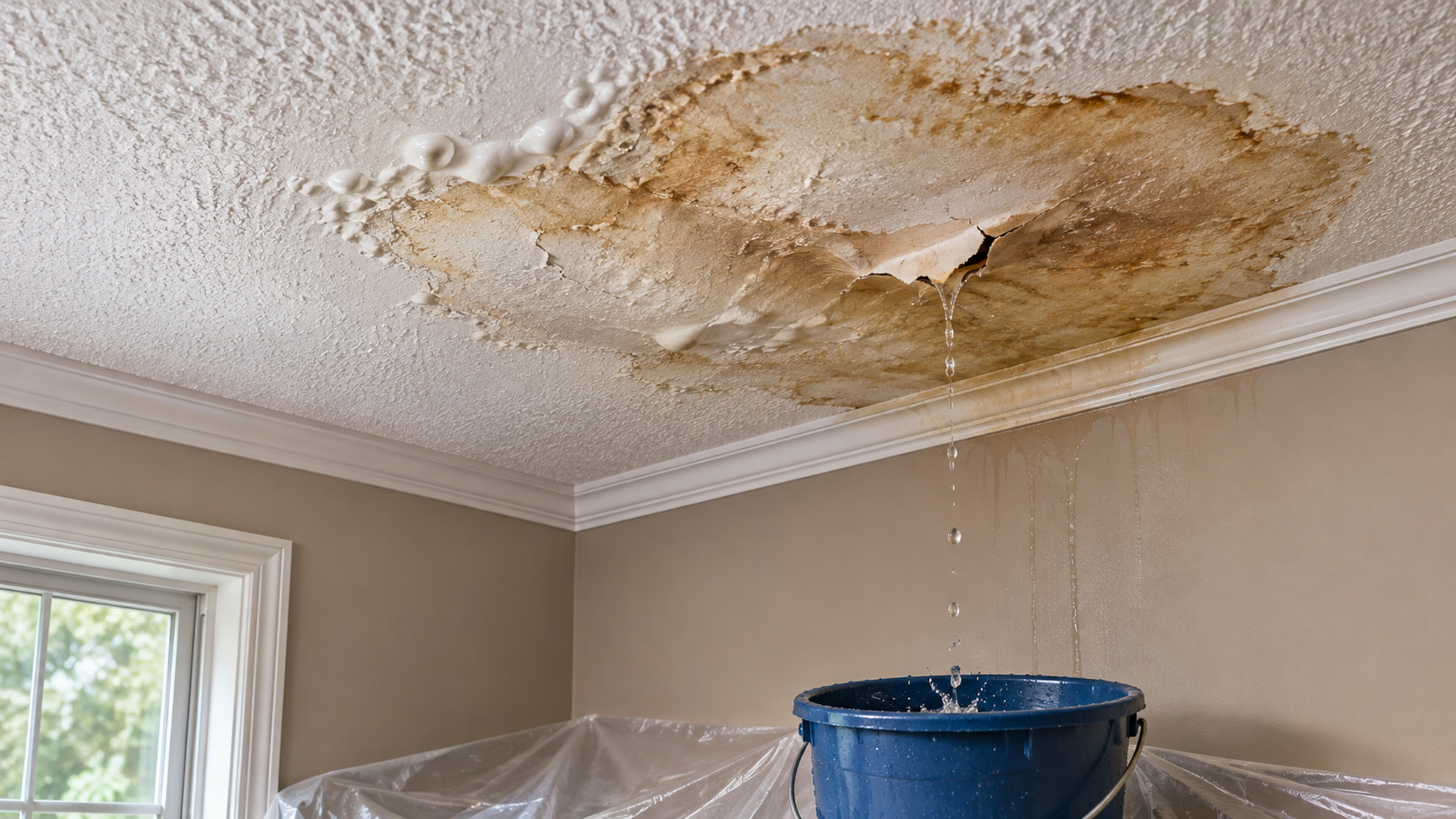
A ceiling leak like this is easy to see. The cold patches that point to missing insulation are not, and that is where a thermal camera helps.
We didn’t have to guess which part of the wall was losing heat
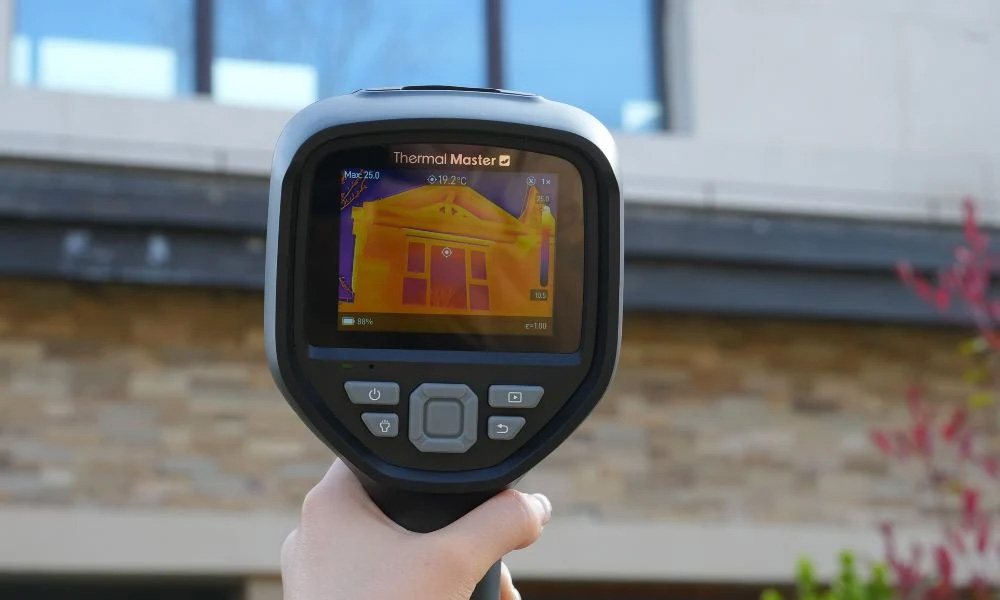
On one job, we used a handheld thermal camera from Thermal Master to find where an exterior wall was losing heat. We could pick out the problem spots against the rest of the wall. A closer look showed that some sections had no insulation. We also found leaks where a lot of indoor air was escaping. Those leaks can waste heat in winter and cooled air in summer.
This is where a modern thermal camera earns its place in the van. When a homeowner tells me a room never warms up, I don’t have to guess which stretch of wall to investigate. The scan can narrow it down to a small area. Once we know what’s going on there, we can recommend a repair for that spot: insulation where it’s missing, air sealing where there’s a leak. That’s a much better conversation than talking about opening up a whole wall when only part of it needs work.
I take the same approach when the cold patch runs along the top of an upstairs wall. At that point, I’d want to see what the insulation looks like just above it, even if the attic was topped up recently.
The bedroom was cold after the attic top-up
Say the crew has packed up and the bedroom still feels cold. The owner is wondering whether the attic needs another layer. The thermal image shows a cold band above the outside wall, but from the attic hatch the insulation looks deep enough. What you can see from the hatch is the middle of the attic. The strip above that bedroom is way out at the edge.
That’s where the quote can change. If the insulation stops short of the top of the outside wall, adding more in the middle leaves the same strip exposed. I’d price the missed edge, not a second top-up for the whole attic. At the eaves, there also needs to be room for air to come in through the soffit vents. Burying a vent to cover the cold strip would trade one problem for another. If I get to that edge and the insulation is already doing its job, I stop talking about an attic top-up. The cold band was a good reason to look there. It isn’t a reason to put more insulation on the bill.
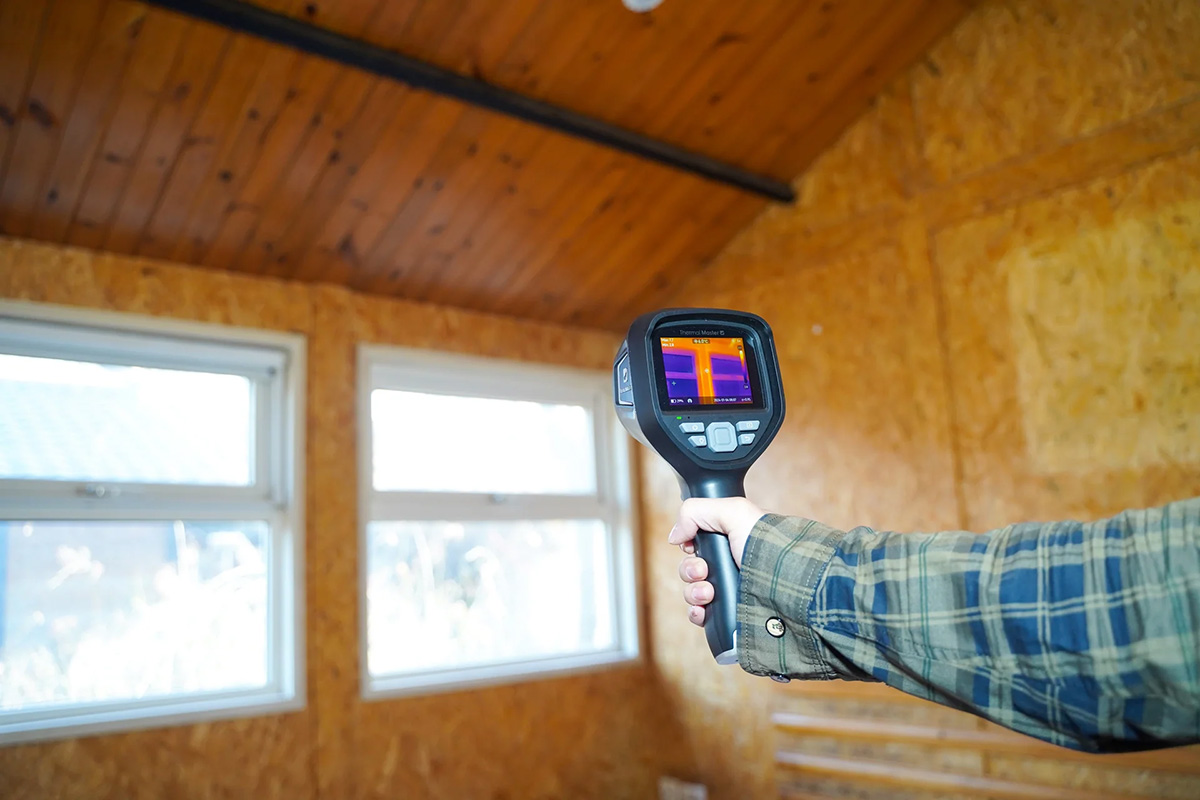
Scanning the wall beside a window settles the drafty-frame-or-empty-cavity question in a few minutes.
At Canada Energy Solution, a free attic assessment is available through our contact page or at (647) 812-5200. Specialist testing isn’t automatically included.
The owner in the old brick building found both a bare spot and a draft at the window. They said the room already felt better after they sealed the draft, before they added any insulation. That’s why I like starting with the cold spot, not the insulation quote.
Attic Talk with Mike
- How Much Does Attic Insulation Cost in Toronto in 2026?
- Insulate existing walls without removing the drywall?
- Attic insulation or solar panels first?
- Attic wiring and insulation: before you cover it up
- No attic vapour barrier? Don’t rush to remove the ceiling
- New attic insulation, but upstairs is still hot
- Bathroom fan dripping? I’d check the duct first


Get a Free Consultation
Our Community Contributions

SickKids Needs You Right Now

Andrew’s Law Is Now Ontario Law: One Year Later, a Family’s Fight Has Made Our Roads Safer

When Tragedy Strikes Home, a Community Must Rise – Standing with the Cristillo Family


